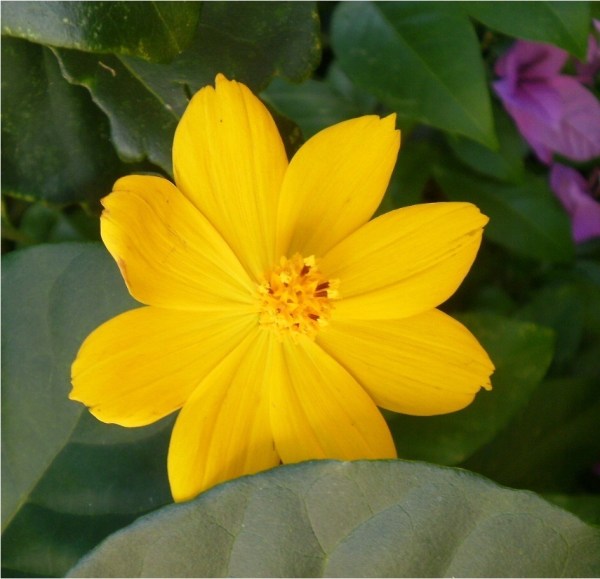
I didn’t like trees

In this last text, of a series of twelve, we are going to talk about how people feel. Life experience here on Earth is individual, and the perception of what is good or pleasant for some people may not be the same for others.

Some people feel good in front of a computer screen. They like shopping malls, electronics stores, and use to buy and use all kind of technological gizmos as soon as they are released in the market. At home, have no pets nor plants or flowers in vessels and consider this absolutely normal.

Others live surrounded by all kinds of pets, cultivate various plants even inside apartments and prefer to visit parks or green areas whenever possible. They also use the latest technology, but at second instance. To be in touch with nature comes in first place for them.

Both behaviors are socially accepted, and when someone says: “I don’t like trees”, we say that this is a matter of choice and that “there is nothing wrong with that”. This attitude may lead someone to put down a tree, just to be exempted to take care of it. Someone could have asked: why be forced to take care of something that you don’t like?

It is an absurdity “to force” a person to like something or someone. It remains to show that respect attitudes towards Nature and environment are necessary for the survival of the human species, in the long run. Trees provide us with oxygen to breathe, and the food that keep us alive comes from plants and animals that we cultivate or process.

This means it is necessary to create an awareness that human beings are part of Nature and depend on Nature to survive !

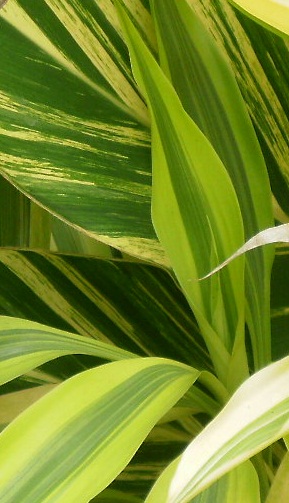
The tree was old

It is amazing how human beings can find excuses for everything. Case in point is a person who puts down a magnificent tree in an urban lot, stating that it was old.

In a forest, old trees fall and may cause damage to other trees and animals below them. In the cities, happens the same. It is not rare to see a fallen tree in an avenue, for example. This could happen in the middle of the night, even in the absence of winds or rain, and hurt no one. It is a matter of chance.

Urban planning, including the choice of appropriate trees species and a systematic control of existing trees are means to minimize the occurrence of a tree fall due to its age. This is feasible and can be done by municipal authorities or non-governmental organizations (NGO).

The purpose of this text, however, is to point out the habit of stating lame excuses to cut a tree. A person is paid to put down a tree, so the owner of the lot gets rid of a “inconvenience”, which he or she considers to be an obstacle to the sale of the property. Any excuse could have been used.

When a tree gets in fact “old”, it is acceptable putting it down if it becomes a threat, even in a private lot. No one is questioning the physical safety issue. But anyone who cares about Nature and is aware of the benefits brought by an OPU (Oxygen Producing Unit), would immediately have planted a young tree to replace the old one.

It was not a native tree

Among the many alleged reasons to put down a tree, this is perhaps the most bizarre one. It is a human determination; it just disregards the right to existence of the tree itself. Nobody asks to be born, neither choses a place of birth nor a social class. This is true also for trees.

There are many examples of non-native trees in Brazil. The avocado tree is native to Mexico. Mango tree comes from India. The apple tree has its origin in Central Asia. The Christmas Pine-Tree was brought to Brazil from conifer forests in the northern hemisphere. And so it goes…

In Nature, the dispersion of species may occur in several ways. Seeds are spread by the wind. Rivers and seas transport plants and animals from one place to the other. And due to their self-motion, animals carry with them diverse species to other localities.

We, human beings, besides having this self-motion, have also fascination, curiosity and economical drive acting on us. This is how, in a time of slight or non-existing ecological awareness, European settlers intensified the introduction of species coming from other regions of the planet to America.

To carry a species to a new locality sometimes generate ominous or undesired consequences. Case in point is the Nile Perch in Lake Victoria, in Africa, or the arrival of the first rabbits in Australia. But these issues not always occur, and new species adapt favorably to environments where they were brought to.

It would be insane to repatriate all species in this world to their original habitats. Nature is a mutant process and adaptation of species belongs to it. The presence of non-native species in a biome can be rationally controlled in order to avoid unbalance; however its sheer decimation contradicts Nature’s supreme principle, which is the preservation of life.

The tree occupied too much space in the sidewalk

Once more we talk about urban planning. Sidewalks are lanes where pedestrians walk. These lanes’ paving is expected not to be cracked, uneven, or slippery. They should not have any obstacle that might hinder the passage or put people’s safety at risk.

This is the ideal picture for a sidewalk. There are manuals and specific norms for sidewalks, which vary from city to city around the world. Not always these rules are followed, and it is a common thing in Brazil to find electricity poles placed in the middle of sidewalks, forcing pedestrians to step down to the street.

Hardly ever electricity poles are removed, due to their size and weight. But what if the obstacle is a tree? They may be high as electricity poles and may have grown right in the middle of a sidewalk, too. Once again, they will have no right to defense, if someone just wants to cut them down. And by removing a tree from an urban sidewalk, we will have one less OPU (Oxygen Producing Unit) in the city. Sad reality.

A solution meant to solve this problem is urban planning, focused on each city block, on every inch of a sidewalk. To make this proposal real, it is enough to say that the involvement of sidewalks users, especially dwellers and estate owners of the city block, is essential.

Before planting trees on sidewalks, the choice of the appropriate species is crucial. Some trees have roots that spread above the ground and may hinder the flow of pedestrians. Another important item is the distance from the corners (desirable 9ft 10in), since bulky branches, as they grow, may interfere in the traffic of vehicles while turning the corner.

Mother Nature counts on you !

After 30 presented texts, the section
“The thirtieth: Time to remember”
says its farewell to the reader in this month of December 2018.

To you, who followed this section, congratulations !
You had the opportunity to get in contact with the basics of the environmental issue in the 21st Century.

For those who are new with these texts, they are an invitation for more knowledge. The basic presented stuff will give you a clearer understanding, when following the environmental headlines on newspaper, TV or Internet.

Remember that the international community and the newly elected Brazilian government are announcing changes related to the Amazon region for 2019. Follow the news on this biome, show to others your opinion about and interact!

Be proactive: Mother Nature counts on you !

Tree would decrease the value of a for-sale real estate

From all reasons stated in this series, in order to put down a tree, this one is the most perfidious. Face to face are two realities: “respect for nature” against “attachment to money”. Moral and ethics, the human soul itself, and the conflict between greed and altruism may be discussed here. But let us go to the facts first:

At the municipalities’ level:

There is a great amount of urban lots without trees in brazilian cities. These same cities miss Oxygen Producing Units (the trees), with their benefits: more fresh air and more thermal stability.

In the cities, there are also lots with few sparse trees. Sometimes these trees are cut down by the landowners under the excuse of “hindering the sale process”. And in most cases, the municipalities do not have any control, neither on planting trees, nor on putting them down.

At the citizen’s level:

Around a vacant lot, with sparse trees, neighbors are benefited from the shadow cast by one of them. Over the years they get used to the stable temperature it helped to keep. Suddenly they see the lot being sold and the tree put down without any convincing reason. Nothing will be constructed. The undeclared reason was the “hassle to keep a tree” and the “increase in value of the real estate”.

It is hard to convince some individuals that social well-being and environment conservation should be above immediate, money motivated interests. In order to change this sad situation, the making of laws, and their application, are necessary. To depend on the consciousness and good will of those who are solely focused on financial gains, would rarely lead to results.

Our friends, the animals

The thirtieth:
Time to remember

Article published in December 2015

In December, we can see many christmas trees and cribs around the city. The pine tree, as christmas tree, is a symbol of life. It keeps its leaves, which remain green, while other trees lose their leaves. This tradition definetely makes sense in the northern hemisphere, where winters are harsh and the landscape is covered by snow.

The nativity scene shows us the newborn Jesus lying on a manger. Around him we see his parents, the three Magi and several animals. Since there was no more room for guests in the inn, his birth took place in the stable, among cows, sheeps, horses and donkeys.

Christmas tree and crib, two symbols of the western culture, are signs of our proximity to Nature. We, human beings, are part of Nature, but sometimes we forget about it. In the beginning of the 21st century, to many people, this keen coexistence with animals seems to be something distant, to be found in books and ancient stories.

Just hundred years ago, the automobile was in its beginning. At that time, horses were part of our daily lives. Pulling carts and carriages, they were the principal mean of transportation in the cities. They had names and nicknames, and needed our proximity to live. Someone had to feed, wash and treat them, with deserved attention and affection.

Technology brought us countless benefits, no doubt about it. Nowadays many people live among machines, a good portion of time: computers, mobile phones, cars and lawnmowers. We became more distant to animals and, who knows, our world became colder therefore. Let us rewarm our hearts during this Christmas season, celebrating with neighbors and our friends of Nature, plants and animals !

How shall we be remembered

The thirtieth:
Time to remember

Article published in November 2015

OLYMPUS DIGITAL CAMERA

Every year, on November 2nd, millions of people around the world, pay tribute to their forefathers. They pray, visit churches or cemeteries, in some way trying to revive the memory of those who left us.

Activate good memories is part of life and it encourages us in our daily journeys. To remember a grandmother’s good advice, or great grandpa’s wise words makes us feel their presence again.

Someday, we will join those who left us. Our whole generation will vanish from the Earth’s crust… And how shall we be remembered
in the future ? What kind of image of ourselves will we leave ?
See here two possibilities:

“The late 20th and early 21st century generation used up non-renewable resources (oil and minerals) from the planet, not paying attention to those coming after. They created the greenhouse effect with their unquenchable consumption habits. Their legacy was the global warming process and its consequent ruins”.

“Despite having spread a development culture responsible for the global warming, the late 20th and early 21st century generation has recognized being victim of their own evil deeds. They established, however, a new awareness and a change in attitude about the environment, plants and animals. Along with these, the return to balance could at least start”.

Life is made up of choices… and we will be remembered by the choices we have made.

Women, family and Nature

The thirtieth:
Time to remember

Article published in October 2015

OLYMPUS DIGITAL CAMERA

There has been a lot of talk about woman’s role in the last decades. Equal rights in the job market, sharing household tasks, raise in family income and so forth. As a result, changes in society and in the economy started to happen.

A remarkable fact is that women’s empowerment walked side by side with higher purchasing power and goods consumption in developed societies. But… to leverage consumerism… would this be the fate reserved for women in the 21st century ?

A woman’s action may have a wide reach. Alone, or as part of a couple. As a child’s mother, while educating and passing her values, and in society, where feminine presence represents almost half of the population. In brief, aware about this or not, a woman is very strong.

In current days, feminine actions could strengthen the environmental cause. It is enough to say that we live times of dramatic climate changes, pollution and urban decay, and reduction of areas dedicated to wild plants and animals. Wouldn’t be this the moment to reconsider women’s action as a force to defend Nature ?

Women can do a lot about environmental preservation. Women and men united, may do even more: acting together they have an extraordinary power. As parents and mentors of a family, they may pass their values of respect for plants and animals to their children. And a proposal of defending divine creation may spring up this way as well… and spread all over the world.

4 reasons for not having a place to live

The thirtieth:
Time to remember

Article published in September 2015

OLYMPUS DIGITAL CAMERA

Reduction of areas occupied by forests
Increase of areas occupied by cities
Increase of areas occupied by agriculture
Increase of areas facing climate change problems

Due to these factors, who remains without a place to dwell and live are wild animals and plants.

With nowadays population and economic growth, where once forests flourished, cities are being built. To feed its new inhabitants, more and more agriculture fields are necessary.

With less forest area, and more CO2 emission, many areas around the globe experience temperature raise. As a consequence, the melting of icecaps occurs, which is home for the polar bear, for example. His existence remains therefore threatened.

In short, animals that used to live in their natural habitat are forced to escape and live an unprotected and fragile existence, exposed to illnesses and hunger. Not finding a place to live, they risk death and extinction.

Think big. Help to break this cycle and create new forests, urban or rural ones. Start planting a tree and taking care of it. With this action, a small portion of our planet will improve: as an immediate result, there will be a new home for birds, more thermal stability and better quality air.