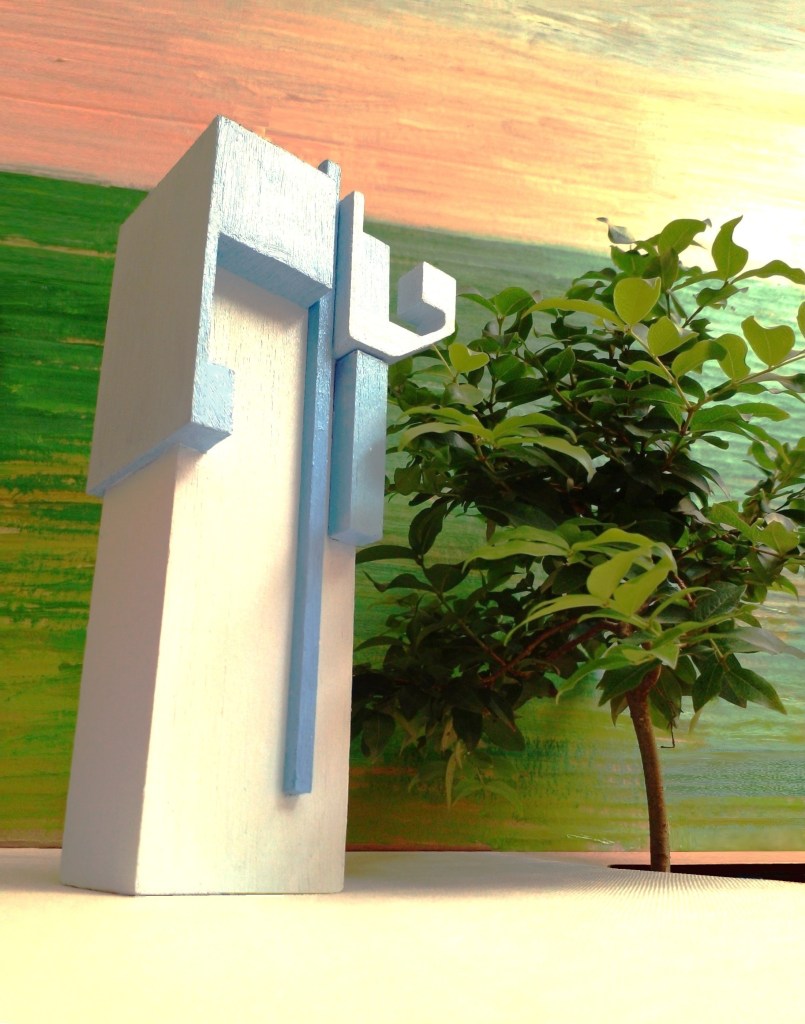
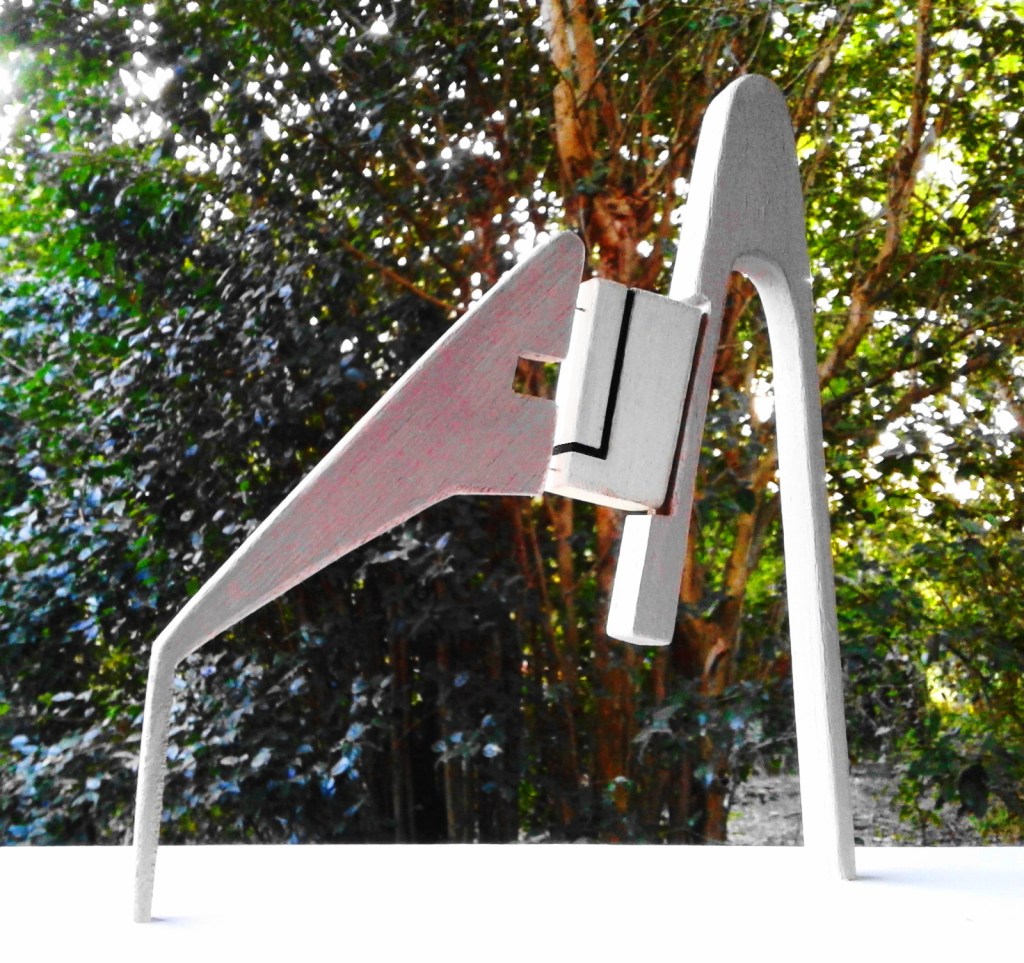
We will now present a new series of sculptures.
They will show up in the coming months, each one carrying a name related to the human psyche.
Enjoy !
Plant and take care today of the future nature !

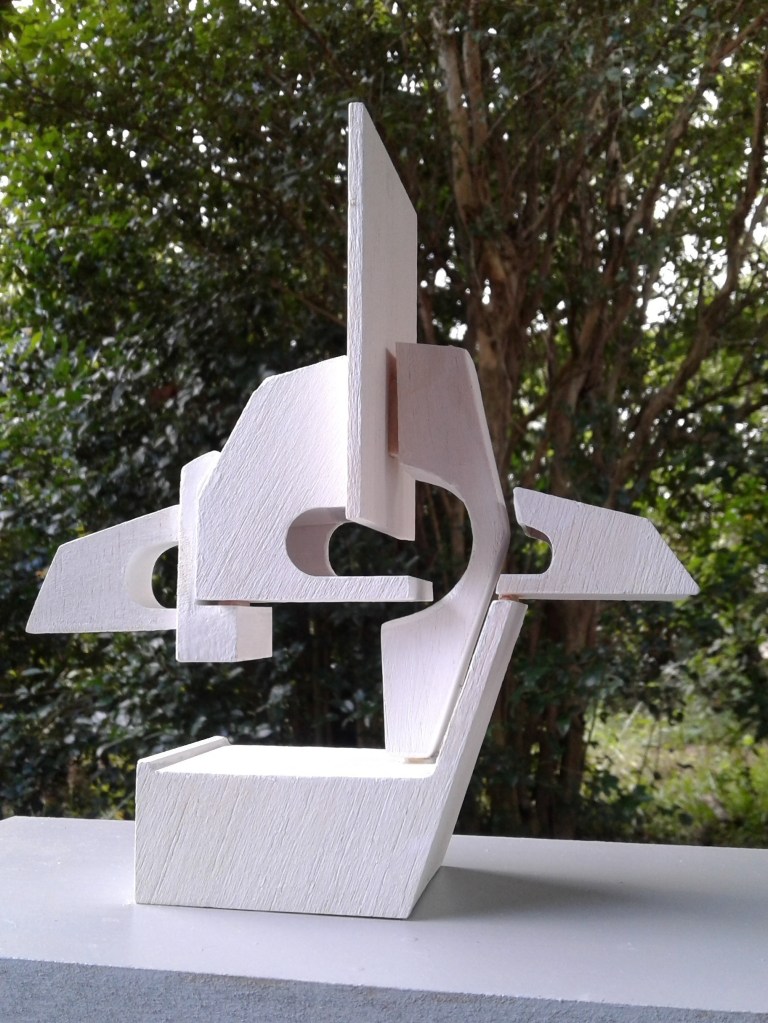
We will now present a new series of sculptures.
They will show up in the coming months, each one carrying a name related to the human psyche.
Enjoy !
From January to May 2018, we published five articles on this website about cycling (originally published in 2015).
Titled
-Safety and bike riding (Parts 1 to 4)
-Traffic flow: To follow or not to follow
These articles are available below, with photos and diagrams.
Simply scroll or search by date or title !
In this month of August 2025, we publish “Safety and bike riding” in a new format. Let’s go to it:

Safety and bike riding
12 recommendations for those who ride bicycles and 4 for car drivers.
For those who ride a bicycle, whether child or adult:
Keeping away from comfort is the number one rule for the cautious biker. In most cities there are no special lanes for bikers. She will have to use improvised ways, cross streets where sidewalks have no slope, etc. Never take a risk, trying easy but dangerous maneuvers: get off your bike and walk a bit, in complete safety, however.
A bike has neither body nor bumpers, and stays upright only if the biker is able to keep its balance. The helmet will protect your head in a collision, always wear it. It will also be a sign for pedestrians and motorists that you are a responsible biker, and they will tend to show more respect to you.
Early in the morning or in the evening, at night or when it is raining, traffic visibility gets poor. Who rides a bike needs to be seen by drivers and a simple, but very efficient way, is to use a light colored shirt. Or a coat, jacket, etc. White color, yellow, bold orange, or any other color that will make the biker recognizable at a distance.
Differently from a motorcycle or a car, whose purr tells you they are coming, a bicycle moves silently. If you notice that your arrival was not perceived and that it could create a risky situation, do a short “ring-ring”. It is a courtesy and will save from a fright pedestrians who walk in bike paths and also other bikers, especially when you come from behind or from the sides.
To the biker who rides in the cities, alone and where bike paths are not available:
Keep distance from cars whenever you have to divide any space with them. Let them pass through; don’t try to compete with them. Automobiles, trucks and buses are bulky and heavy. They need space to brake or to turn in a big curve. You, biker, occupy less space, you are light and have no steel body to protect you… therefore, keep distance.
Opt to ride in streets where traffic is less intense, whenever possible. Sometimes you may be riding in a heavy traffic avenue, while its parallel street is quieter. It is worth to extend the distance to ride to make it in quieter routes. This is another way to preserve safety, keeping away from automobiles. It is a defensive attitude of bike riding.
As children, we learned about conventions on walking in the cities. As pedestrians, we learned to wait for the traffic light to close in order to cross the street. Traffic is a system of conventions between people. To ride along the traffic flow is a convention that pedestrians understand, and motorcyclists and drivers obey. To ride against the traffic flow is to break a convention, and this gives rise to confusion on people’s mind when taking decisions. Let your intentions be undoubted when riding: always ride along the traffic flow, for your safety.
To ride in a street in the dark and recognize a figure just when coming close, is like getting a fright. Who travels at night in a public route must use red safety lights, whether it is a truck, a car, a motorcycle or a bicycle. The back warning light is recognized at a distance and allows sufficient time for the driver to divert. Do no take a risk. When riding at night, always turn your back light on.
Facts involving bikers and pedestrians:
When you drive a car, your vision will be limited by some blind spots in the car’s body, and you will need to use rear mirrors. When you ride a bike, you will have total vision. Use this feature in your favor. Look at both sides, move your neck always and pay attention to obstacles, objects and pedestrians around you. To use the neck’s muscles is an excellent exercise, especially for those who spend their days sitting in front of a computer.
Many times it is possible for the biker to ride in sidewalks. When vacant, they are a safer place to ride than the street. Some of them have crossed grass and cement patterns or holes, and these end up to be a worse place to ride than the asphalted street. But when there are no bike paths available and when sidewalks are in good shape, they become the best option for a safe ride.
The sidewalk is the pedestrian’s place: never disregard her. When coming close, warn her whenever necessary with a soft bell ring, in order to avoid a fright. When passing beside him, keep distance and ride at the pedestrian’s speed. There is nothing worse for him than a biker than comes up from nothing and passes too close, at full speed. Besides causing the pedestrian a fright, it can make anger grow against bikers in general.
In many countries around the world, it is against the law to use earphones when driving. Using them while bike riding means a big risk, too: you might not tell the upcoming of other bikers, pedestrians or automobiles. Riding your bike in parks or joint bike paths, where adults, children or leashed animals walk, will demand as much attention as driving in street traffic. Therefore, use your earphones later, after arriving at your destination.
Recommendations to drivers in general:
Not everyone is able to seat on a bike and stay there without falling. In order to ride a bicycle, a person needs to balance on it. Many times, a biker cannot release her hand from the handlebar to show thankfulness for a gentle driver. In other cases, a biker could not show with an arm gesture her intention to turn to the left, for example. To release a hand from the handlebar could mean lose balance and fall to the ground. Take this always in consideration.
Asphalt holes or curls, a pool of oil, a thick layer of pebbles, a small obstacle, or even an ice layer (in places where temperature reaches 32° F or less) can make a biker fall. In streets and roads, the possibility of finding something that causes a biker to go to the ground is very high. Ironically, a biker needs space around her to fall in a safe way. Therefore, never pass too close by a biker. Keep always a reasonable distance (1 yard 2 feet or more).
A bicycle is moved by the biker’s legs: it has no motor. Therefore, when a biker is standing still and starts to move, he needs more time to reach some speed than a motorcycle, for example. And since a bike ride depends on the biker’s muscles, he could not be able to finish it due to energy failure. He will need to stop to get some nourishment and then keep going. He will always need lots of liquids and protection from excessive heat: a sunstroke, lack of water or food may cause him to faint.
In the 21th century, more and more streets and roads around the world are planned to accommodate automobiles. Little space is dedicated to bikers. Who rides a bicycle, has to be satisfied with few bike paths offered by some cities. A driver should pay respect to these spaces, not driving or parking on the lanes planned for bikers. A peaceful coexistence in traffic will depend on obedience to the law, good will and mutual respect between drivers and bikers.
Our first texts were published in 2013. In 2016, this website, naturafutura.org, was created, and in 2019 we began to publish the Park Project.
After six years (2019-2025), this project ends its online publishing phase. The next step will be to transform this twelve-year experience into a book.
The planting and our care for the trees of the Atlantic Forest continue. And a new park project is being developed, this time to be presented also in book format.
We hope that this work has been valuable to you, who have followed us through all these years. Our thanks and best wishes for success in your experience of protecting and loving Nature !
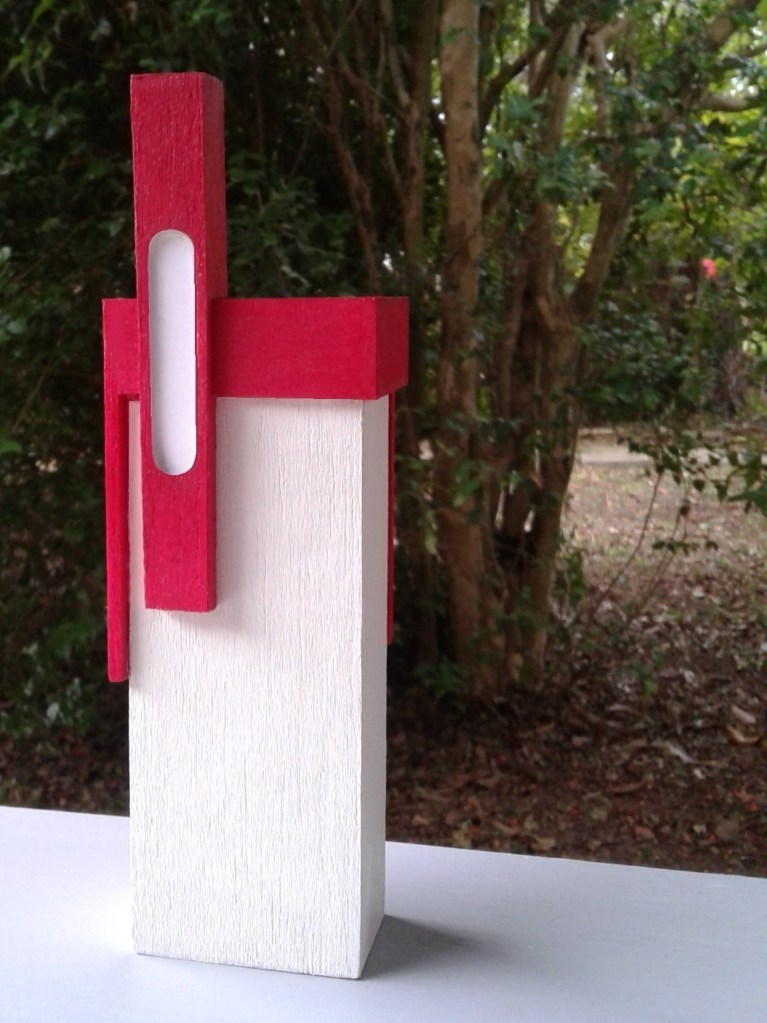
“Health” presents Cambuci
Cambuci is the proposed tree for the eighteenth station of the park. Its scientific name is Campomanesia phaea. It belongs to the Myrtaceae family, the same family as pitanga, guava and jabuticaba trees.
The shape of its fruits resembles a ceramic pot, whose name in the Tupi language is cambuci.
Also called Cambucizeiro, Cambuci is a tree native to the Atlantic Forest, currently found in Serra do Mar (the mountain range near the Atlantic Sea), in the State of São Paulo, and in Teresópolis, State of Rio de Janeiro, Brazil.
It grows 3 to 5 m (10 to 16 feet) in height, and its trunk reaches 20 to 30 cm (8 to 12 inches) in diameter.
Its fruits, which ripen in January to March, have an acidic flavor, similar to lemon. They are used in cooking to prepare juices, jellies, ice creams and flavorings in alcoholic beverages.
The cambuci fruit is rich in vitamin C, vitamin A and B vitamins, as well as containing iron and antioxidants. Its consumption has therapeutic effects, beneficial in treating respiratory diseases, fighting premature aging and cholesterol, and strengthening the immune system.
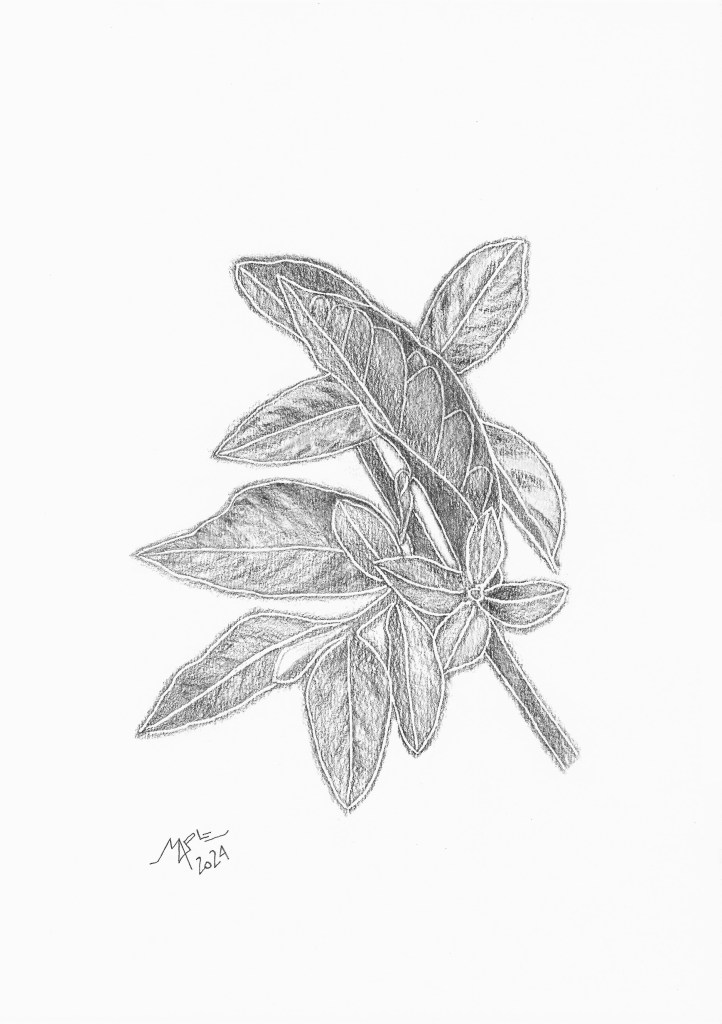
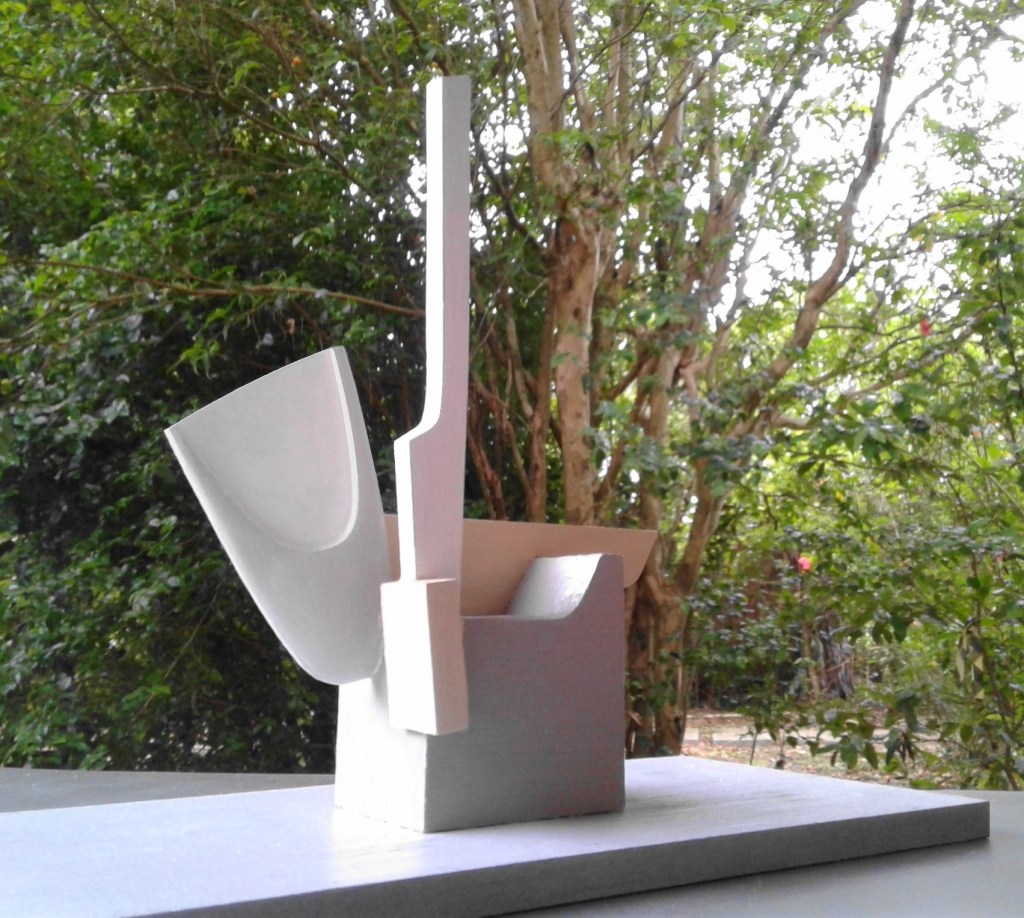
“Good Will” presents Copaiba
Copaiba is the tree proposed for the seventeenth station of the park. Its binomial name is Copaifera langsdorffii. It belongs to the Fabaceae family, the same family as the already mentioned Cabreuva, Sibipiruna, Inga do Brejo and Brazilwood.
Its name comes from the Tupi language (kupa’iwa) and it is popularly known as copaibeira or pau-de-oleo (oilwood). It is a tree native to the Brazilian biomes of the Atlantic Forest, Amazon and Cerrado. It also occurs in Argentina, Bolivia and Paraguay.
It grows from 5 to 35 meters (16 to 114 feet) in height, and its trunk is cylindrical and curved. Its foliage is initially light pink in color, turning red in the spring.
Its wood, also red, is highly resistant and used in carpentry and civil construction.
Copaiba oil is used in folk medicine in the Amazon as an expectorant and antiseptic, and also in the treatment of skin diseases such as eczema and dermatitis. Filtered, its oil can be used as biodiesel (automobile fuel).


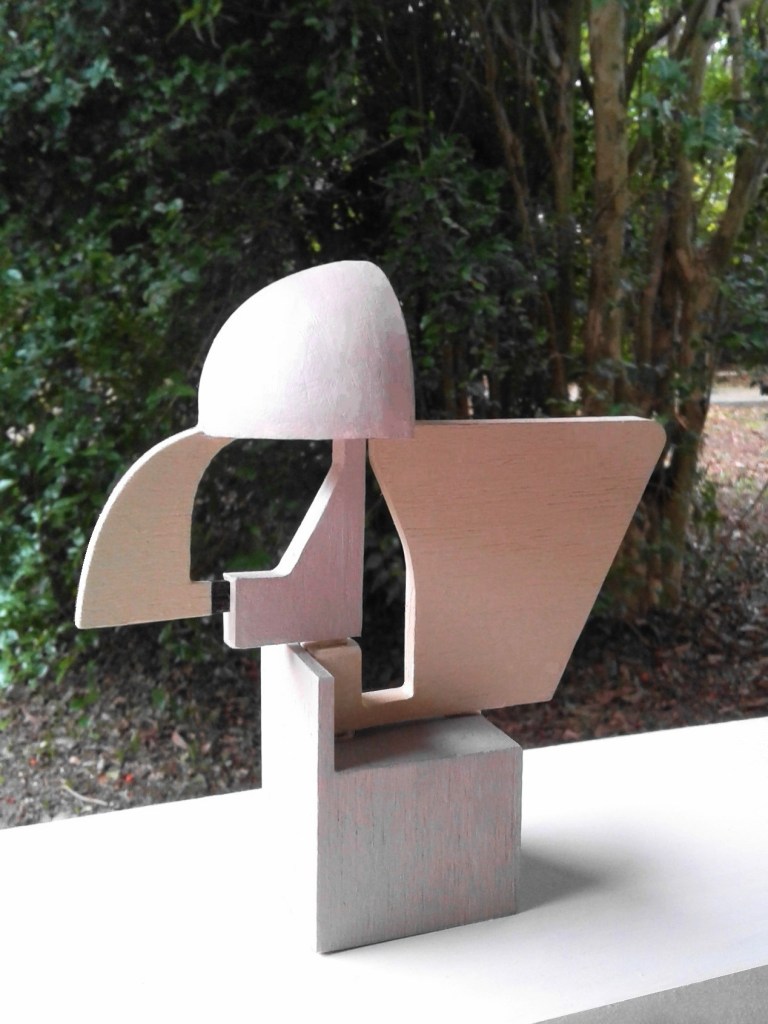
“Patience” presents the Purple Glory Tree
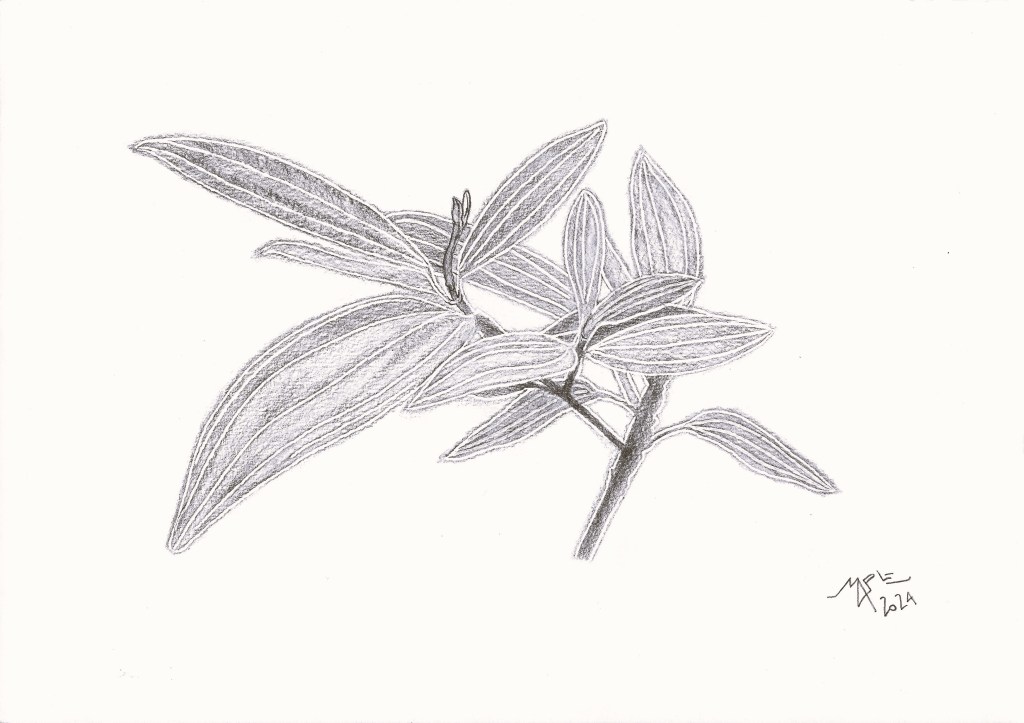
Purple Glory is the tree proposed for the sixteenth station of the park. Its binomial name is Tibouchina granulosa. It belongs to the Melastomataceae family.
Its name in portuguese (Quaresmeira, i.e. “of Lent”) comes from the fact that it blooms from January to April, coinciding with the Christian Lent period. In addition, its flowers are purple, a color associated with the Passion of Christ. Therefore this reference also in its english name.
The Purple Glory Tree is a pioneer species. It occurs mainly in the Atlantic Forest of the brazilian State of Bahia and southeastern Brazil, and also in gallery forests of the cerrado biome.
It is a medium-sized tree and can reach 8 to 12 meters (26 to 40 feet) in height. The diameter of its trunk can measure between 30 and 40 cm (12 to 16 inches). Its lifespan is around 70 years.
Its fruits, hard and dry, are brown and cup shaped. They measure around 1 cm (0.4 inch) in diameter.
The tree leaves are elliptical in shape and have a hairy texture, which means they feel somewhat rough when touched.
Its wood, which is of low quality and quite light, is used to make rafters, posts, crates and toys.
Because it grows quickly, it provides shade for native species to develop and is recommended for the recovery of deforested areas.
Common in urban areas of the southeast of Brazil, the Purple Glory Tree forms a dense canopy, which gives it an unparalleled beauty.
Eleven years has passed since the first text from Natura Futura was published and five years have passed since the Park Project was presented, back in April 2019.
The Project keeps going, with “Patience” being its 16th station. The trees planted in this time frame are being cared for and new plants are planned to be planted in the future.
Natura Futura is alive and well, working on the field. We propose you join this initiative by telling online your experience with trees. Use this space to share your experience with the trees you have planted and your effort to take care of them !
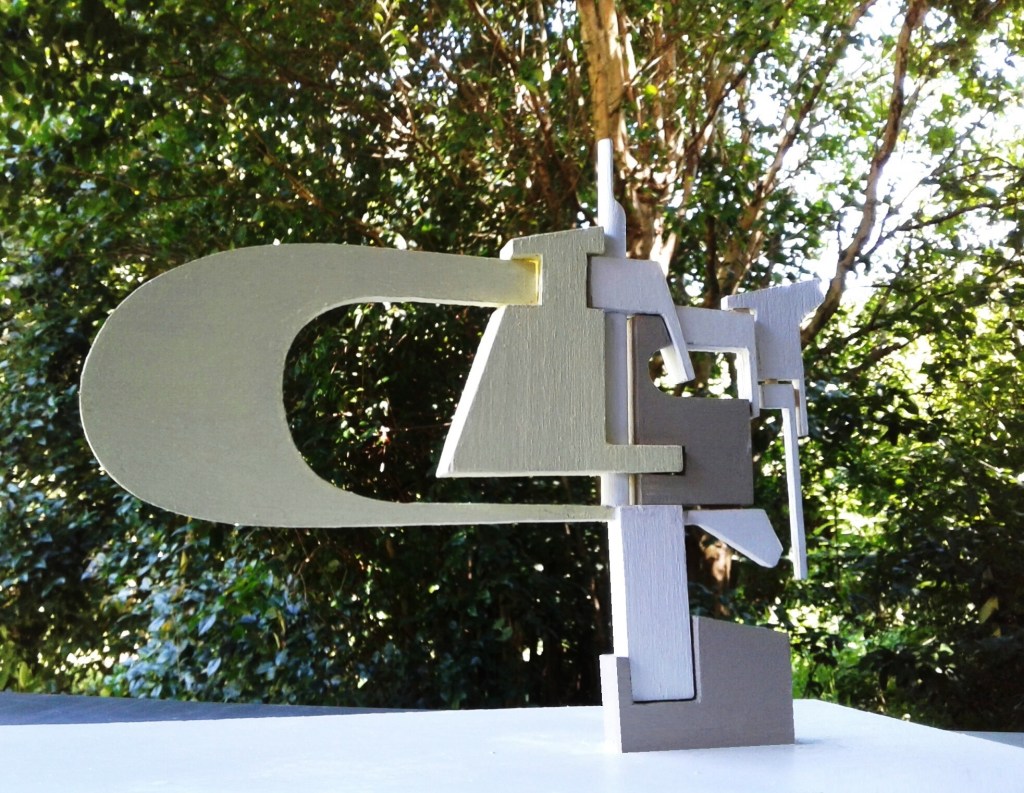
“Well-Being” presents Guanandi
Guanandi is the proposed tree for the fifteenth station of the park. Its binomial name is Calophyllum brasiliense Cambess. It belongs to the Calophyllaceae family.
It is known by several popular names:
casca-d’anta (tapir peel)
cedro-do-pântano (swamp cedar)
cedro-do-mangue (mangrove cedar)
galandim
guanambi
guanambi-carvalho (oak guanambi)
guanambi-cedro (cedar guanambi)
guanambi-landim
guanambi-de-leite (milk guanambi)
guanambi-vermelho (red guanambi)
golandim
guanandi (named in the southwest of Brazil)
guanandi-amarelo (yellow guanandi)
guanandi-do-brejo (swamp guanandi)
guanandi-carvalho (oak guanandi)
guanandi-cedro (cedar guanandi)
guanandi-da-praia (beach guanandi)
guanandi-jaca (jackfruit guanandi)
guanandi-landim
guanandi-landium
guanandi-lombriga (worm guanandi)
guanandi-piolho (lice guanandi)
guanandi-poca
guanandirana
guanandi-rosa (pink guanandi)
guanandi-vermelho (red guanandi)
guanantim
gulande
gulande-carvalho (oak gulande)
gulandi
gulandi-carvalho (oak gulandi)
gulandin
gulandium
gulanvin-cavalo (gulanvin-horse)
iarairandira
inglês (english)
irá-iandi
jacareaba
jacareíba
jacareúba (named in the Amazon region)
jacareúba-guanadilandium
jacareúba-guanani
jacare-uba
jacarioba
jacariúba
jacurandi
landi
landi-carvalho (oak landi)
landi-do-brejo (swamp landi)
landi-jacareíba
landim (named in the Amazon region)
landim-do-brejo (swamp landim)
landim-jacareúba
landinho (small landi)
landium
landium-do-brejo (swamp landium)
landium-jacareíba
lantim
maria (Mary)
oanandi
oanandim
olandi
olandi-carvalho (oak olandi)
olandim
olando-carvalho (oak olando)
pau-de-azeite (olivewood)
pau-de-maria (Mary’s wood)
pau-de-santa-maria (St. Mary’s wood)
pau-sândalo (sandalwood)
pindaíba
pindaíva
santa-maria (St. Mary)
uaiandi
uá-iandi
uáiandi
urandi
The word “Guanandi” comes from the Tupi language and means “fruit with sticky gum”. It is native to the Amazon, Cerrado and Atlantic Forest biomes of Brazil. The latex in its bark is used to produce landim balm, which has medicinal uses, such as healing (i.e., helping the growth of a new tissue that forms over a wound).
It is a tree that grows up to 30 meters (98 feet), with a trunk that can reach 60 cm (23 inches) in diameter. Its wood, considered hardwood, was widely used in the construction of ships during the Brazilian imperial period.
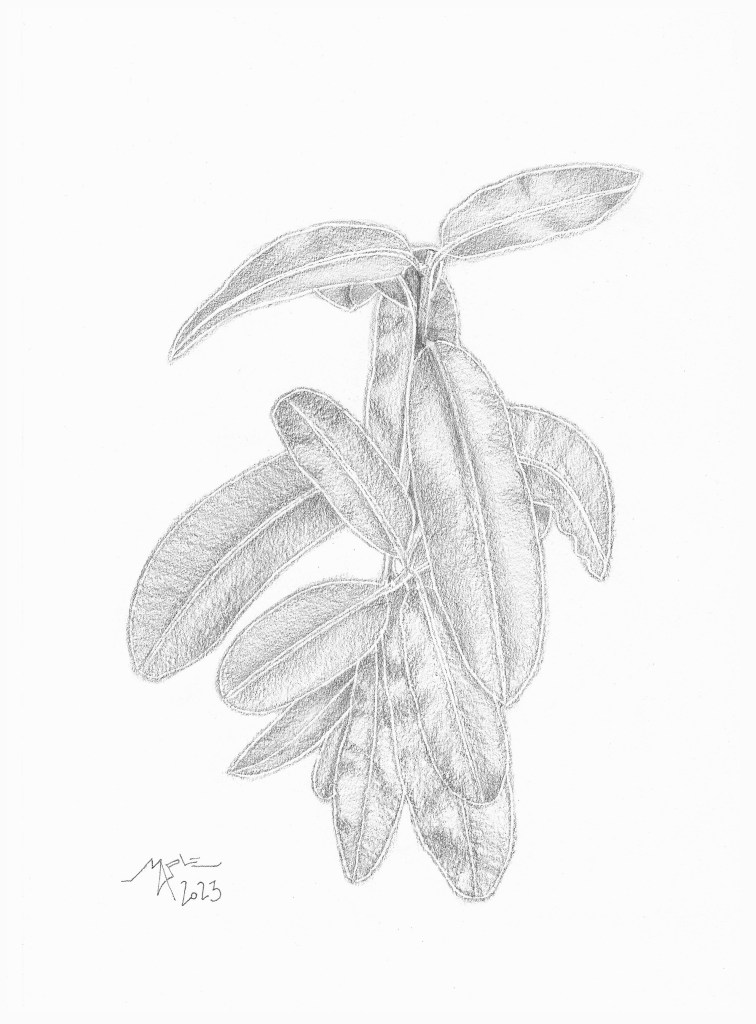
Its flowers are white and bloom from September to November. Its leaves have a characteristic light green surface and are intersected by a charming dark green central line.
“Knowledge” presents Café de Bugre
Café de Bugre is the proposed tree for the fourteenth station of the park. Its scientific name is Cordia salicifolia. It belongs to the Boraginaceae family.
Cordia salicifolia is also known as Cordia digynia or Cordia coffeoides and has the following popular names:
porangaba
bugrinho (little bugre)
café-do-mato (wild coffee)
cafezinho-do-mato (small, wild coffee)
café-de-bugre (Brazilian indians’ coffee)
chá-de-frade (friar’s tea)
claraíba
louro do mato (wild laurel)
The name Porangaba comes from the Guarani language and means “fruit with reddish pulp”. Its fruits are reminiscent of the fruits of the coffee tree, and bugre is an old European reference to the indigenous people of Brazil. Hence the name Café de Bugre.
It occurs in the Atlantic Forest, from the northeast to the south of Brazil, and in Paraguay. Its height is between 8 and 12 meters (26 to 39 feet), even reaching 20 meters (65 feet) in forests. The diameter of its trunk reaches between 30 and 40 cm (12 to 16 inches).
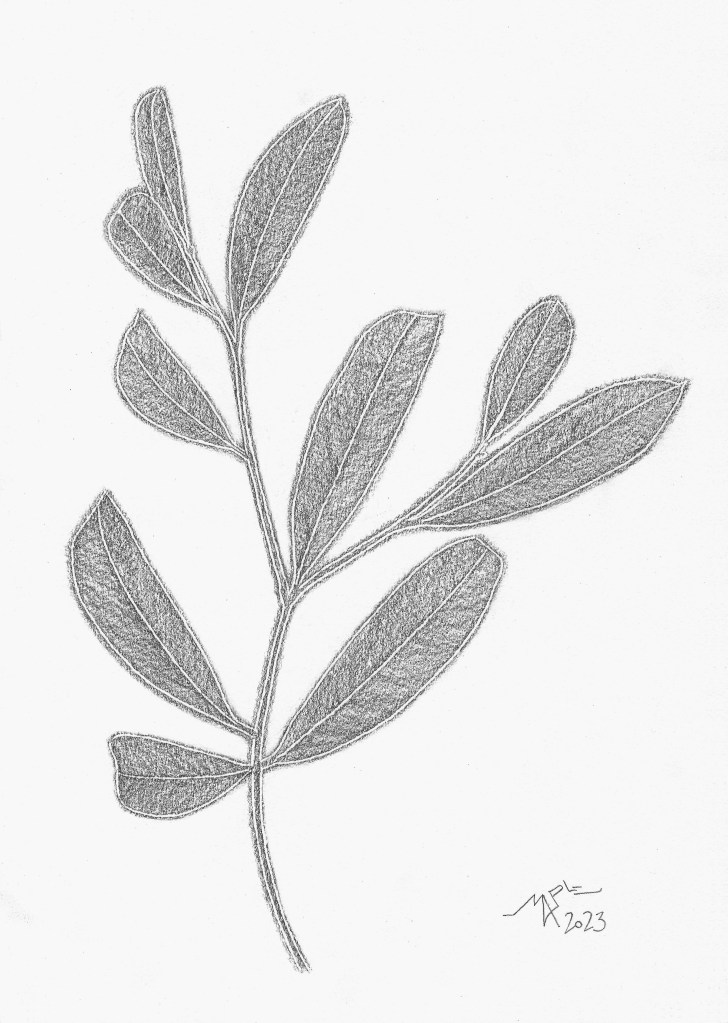
Its wood is soft and compact, but not very durable. Its flowers are melliferous and its fruits are red, with a taste similar to persimmon. Its leaves, which measure between 8 and 14 cm (3 to 5 inches), have a very expressive and elegant shape.
“Initiative” presents Sibipiruna
Sibipiruna is the proposed tree for the thirteenth station of the park. Its scientific name is Caesalpinia pluviosa. It belongs to the Fabaceae family (the same family as the Ingá-do-brejo tree).
Its name comes from the Tupi language and means “black sibipira”. Native to the Atlantic Forest, its foliage is similar to the Brazilwood. Its height ranges from 6 to 18 meters (20 to 60 feet), and can reach up to 28 meters (92 feet). The diameter of its trunk reaches between 30 and 40 cm (12 to 16 inches).
Its leaves fall off in winter, almost completely, and reappear in spring. Its flowers are yellow and appear from September to November. Its fruits are flat and contain about 3 to 5 seeds. It is a long-lived tree, and can reach 100 years of age.
Sibipiruna is a pioneer species (like the Timbó tree), and is one of the first species to appear in a degraded area. It is large, has exuberant flowering, provides cool shade and grows quickly. These are traits that make it in tune with the concept of Initiative !


“Determination” presents Cabreuva
Cabreuva is the proposed tree for the twelveth station of the park. Its binomial name is Myrocarpus frondosus. It belongs to the Fabaceae Family.
Cabreuva has various popular names:
cabriuva
cabriuva-parda (dark “cabriuva”)
cabrue
cabureiba
oleo-cabureiba (oil “cabureiba”)
oleo-pardo (dark oil)
pau-balsamo (balsam wood)
The word “Cabreuva” comes from the Tupi word “cabure iwa”, which means cabure tree. Cabreuva is a tree native to the Atlantic Forest, found in the northeast, southeast and south of Brazil. Its wood is reddish and considered noble. Its sawdust is used in perfumery and its bark has medicinal uses.
It is an aromatic and honey-bearing tree that grows up to 30 meters, whose trunk can reach 80 cm in diameter.

 Natura Futura