Sustain

The thirtieth:
Time to remember

Article published in July 2014
July (1)

We know the word sustain. We know that children need care, and that parents support them. There will be a moment in their life when changing diapers will cease, handing them pocket-money will stop or paying college will come to an end. Children become independent and start self-sustaining, i.e., supporting themselves.

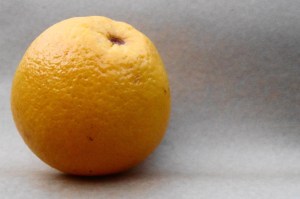
Observing Nature, we notice that an orange tree let its leaves and oranges fall on the ground. If oranges are not harvested, they will break off after a while. Leaves, peel and pulp will merge with earth and, with the help of microorganisms, will become soil’s nutrients. The seed will grow, and a new orange tree will be there, producing new oranges. This is a cycle.

An orange and its parts (peel, pulp, seed) are recyclable, and this process is conducted by Nature. No human action is needed; it will happen in an independent way. Therefore we call it self-sustainable.

In our daily lives, glass is an example of cycle. Used for thousands of years, it is a material developed by man. Today we use glass in packages, which after use, can be recycled. But human action in this cycle will always be necessary. Used glass cannot remain in the environment until it breaks off. It needs to be taken away to a recycling unit, to be molten and reused. Glass is recyclable, but this process depends on human action.

Tires are another case. Part of their raw material comes from the rubber tree. After its use, however, it is not possible to reuse this original material like we do with glass, for example. Old tires are used in new shoe products or are shredded and mixed as an ingredient of road asphalt. And this process also depends on us to be carried.

From these examples, the orange tree one is the most functional and complete. We, human beings, are challenged today to create materials and processes inspired by the self-sustaining examples of Nature. This challenge adds sense to the word s u s t a i n a b i l i t y.
Dengue, Prevention and Hope

The thirtieth:
Time to remember

Article published in June 2014

OLYMPUS DIGITAL CAMERA

To list the wonders of Nature is an easy task. It is nice to talk about the beauty of a flower, the miracle of life and the enchantment of a wave breaking on a beach.

But Nature is not only this. When we talk about the divine Creation, as described in the book of Genesis, we think of sees and mountains, plants and animals. But, what about the dengue mosquito, the Aedes aegypti, where does it fit in this theme ? Its name means “The hateful from Egypt”, perhaps as an alert about the dangers it might bring about us, humans.

Currently several brazilian cities are facing hard times, as a dengue epidemics reaches big proportions. Public campaigns constantly recommend that mosquito’s breeding points be eliminated, i.e., places that make its reproduction possible: clean water, standing in some location where the mosquito lay its eggs.

Dengue is a sickness caused by a virus and transmitted by the mosquito by means of a sting in our skin. Therefore it is important to fight the mosquito and its reproduction: if there is no mosquito there will be no sting, and without a sting, there will be no sickness. The dengue fever, as it is known, can be treated, but in some cases can lead to death.

Everyone is responsible to fight the dengue mosquito. In a time of an unprecedented urban growing, various kinds of objects, debris or spread garbage remain exposed to air and rain, and they end up by accumulating water, where the mosquito will later lay its eggs. As a conscious citizen, be always alert, and specially, if you are in a leadership position, let your actions be an example to others: strive to avoid the formation of mosquito’s breeding points.

To build dengue free urban spaces, which combine well being and respect to Nature, is a challenge in this 21st century. And at the same time, it means hope.

The Name of Things

The thirtieth:
Time to remember

Article published in May 2014

May (4)

While you walk in a street, you see a car that you have never seen before. You want to know its name, then you get closer to its rear part and see there, engraved in a tag, the model’s name.

With trees it is different. We use to know the name of some species, that are quite different among themselves: a pine tree, a palm tree or maybe a cactus. Other trees we can recognize by their fruits, like an apple tree or a mango tree.

Truth is that the amount of tree species in our planet is immense and its great majority has a similar shape. A professional who studies plants will know trees, and call them by their binomial name (scientific name). Example: Cedar of Lebanon, is called “Cedrus libani” by a botanics expert.

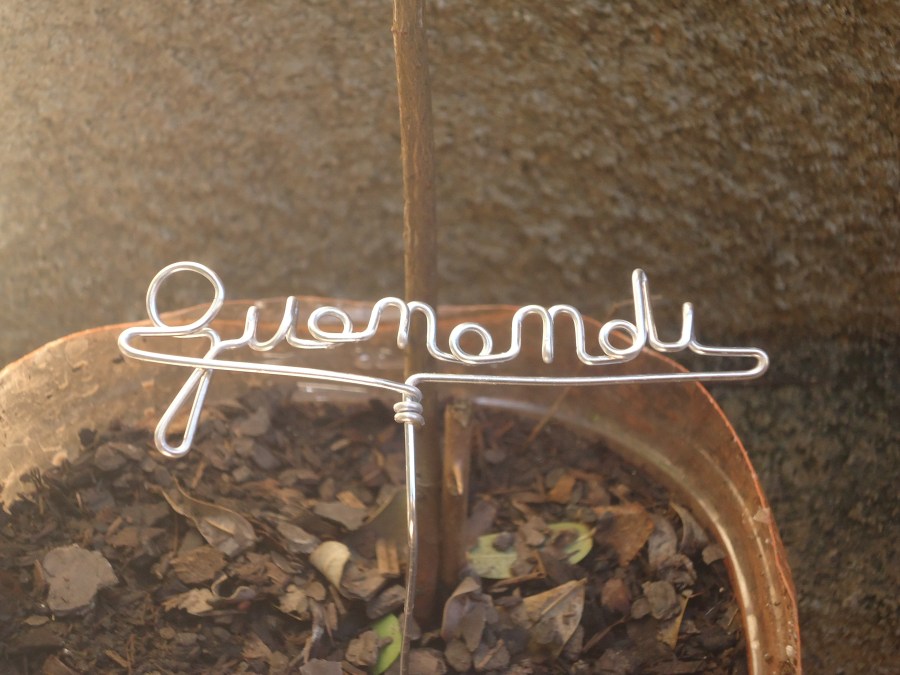
Ancient cultures assigned names to trees, which we still use nowadays and called them “popular names”. Case in point is the “Calophyllum brasiliense” (scientific name), which is popularly known in Brazil as “Guanandi” (indian name) or “Santa-Maria” (portuguese name).

It is important to know the name of something we want to protect and get to know better. A suggestion is to identify trees by writing their names in a handwritten style, by wrapping an aluminum wire. A good craftsman, using pliers, can carefully write this information for you.

You just need to put it on the ground and you will be able to read the name of a tree whenever you want to !

Tree got car dirty due to birds resting on its branches

Bird

Much attention has been given to trees when we talk about “nature” or about the “environmental issue”. That’s because when a tree is planted where no tree existed before, a cycle starts. A tree is an oxygen producing unit, a humidity stabilizer and a shelter to small animals.

Some of them look for a tree due to its shadow (that is the case of human beings…), others search it for protection, as a refuge. Birds many times build nests, or simply rest on its branches.

The cycle continues when this tree reproduce. Another tree is born, and then, step by step, a forested area starts to grow with plants and animals around it (insects, worms, caterpillars, squirrels, etc.) We say that an ecosystem is taking shape. This process keeps going until its height, when an intense utilization of the local space and resources takes place. This stage has been historically called climax community.

These concepts are described in detail in ecology books. We decided to talk about them, because they illustrate how important a tree is in the cycle of life, here on planet Earth.

On the other hand, we understand that many people like their cars. They are practical, moving people and loads from place to place. They might be beautiful or not, and may have cost lots of sweat and work from those who own them.

When a bird resting on a tree let its manure fall on an automobile and this scratches its paint job, the bird is not doing it on purpose. Birds are part of the cycle of life in our planet, while a car is a human invention (no matter how useful or beautiful it may seem).

The awning, another human invention, is a solution to protect a car’s paint job. And compared to the price of an automobile, it is a fairly inexpensive gadget. Now, a decision needs to be taken: spend some money to buy and install a car awning ? Or cut the cycle of life represented by the tree and its birds ?  Everyone’s conscience  should decide.

Carbon and you

The thirtieth:
Time to remember

Article published in April 2014

April (4)

Few years ago, a young man asked me: “What is carbon ?”
I talked to him about carbon dioxide, graphite, coal and diamond. Then I wrote some chemical formulas with many letters “c” and showed it to him. I could see disappointment in his face…
I was talking about something really difficult to imagine.

Today I would answer that carbon is part of many things around us. It is like an ingredient that you don’t see, but you know it is there. It is part of our body, of gasoline, of ethanol fuel, of the food we eat, of the air we breath, etc.

Why people talk so much about carbon nowadays ? It is a matter of quantity. The air we breath in our planet has increasingly more carbon. This carbon was part of the oil, for example, that was once below the earth and the see. Since roughly hundred years, it started to be used by the industry and automobiles, which, by burning their derived products (gasoline, diesel, etc) throw carbon in the air. Air pollution started to increase therefore.

The problem is not carbon, but the unbalance about its quantity: in the past, it was below the soil and today it is in the air, in an excessive amount. By means of plants, Nature could solve this unbalance. Through the photosynthesis phenomenon, trees capture carbon gases from the atmosphere transforming them into oxygen gas. The problem, again, is the amount: day by day, more carbon is thrown in the planet’s atmosphere while the quantity of trees that could help to solve this problem gets shorter.

A planet made for us

The thirtieth:
Time to remember

Article published in March 2014

IM000061.JPG

Most of our planet is covered with water (oceans). Above the earth, we have the atmosphere. And the dry land (continents) is the space reserved for us, human beings. What we call “the world we live in” is a finite territory, and to a good extent, is custom made for our existence.

Part of the dry land is not liveable due to temperature extremes. The frozen land around the south pole, and other areas spread around the globe, like the Sahara, are some examples. Our body internal temperature is around 36°C. We are very sensitive to the external temperature: it affects our body’s equilibrium and our well being.

To live in the midst of the ocean is possible. Some projects of marine platforms are pointed as a solution for countries that have small territories. To live immersed in water, artificially, is also a reality. Inside a submarine, we have temperature and pressure of the earth’s surface created by equipment. But both are expensive alternatives.

In analogy to the see, to live in the atmosphere, or above it, is also possible: inside an airplane or a space station. Inside them, temperature and pressure, similar to those found in the earth’s surface is recreated, and we can also live there.

Underground cities exist in projects, to be used in case of war. Life in other planets is still a mistery to be unveiled: first, it would be necessary to find a planet with conditions similar to our Earth’s, and then, create an efficient mean of transportation to colonize it.

Nothing is better than taking care of our good old Earth. Keep the cities we live in clean and organized, reducing the amount of pollutants, replanting forests and protecting the natural sources of water. Like poets once said, our planet is unique: it is the only one…

Material world and living world

The thirtieth:
Time to remember

Article published in February 2014

02_feb-4

In some place, we living beings dwell.
We need a space to live in the material world. Let us consider some examples:

1.The atmosphere is the place where birds spend part of their time, and where many microorganisms live permanently.

2.Among the rocks, live several kinds of spiders

3.In the sand, crabs live. They spend their days in holes or moving side to side.

4. In the seawater, live many species of fish, plants, microorganisms and even the biggest mammal, the whale.

The list continues, but remember that these are material spaces (air, water, rocks, sand, etc.). However, in their materiality, they offer conditions that make like possible.

It is the case of the atmosphere. In the primordial times of our planet, it had no oxygen. Primitive forms of life enriched our atmosphere with this gas, allowing the existence of more developed forms of life, including ours.

Our material world is thus different than that one in Mars, despite many similarities between the two planets.

This is the base of the Gaia Theory: primitive forms of life transforming the material space of a planet in order to make possible the existence of more developed forms of life.


Tree “dirtied” the sidewalk with leaves, branches, seeds and fruits_2nd vision

Our web site aims to find solutions, so that trees living in urban environments do not be cut down unnecessarily. The text presented last December pointed out an idealistic solution to keep fruit-bearing trees in the cities, saying that gathering leaves, branches, seeds and fruits from the ground is a privilege given to good will and conscious people.

Obviously this is just one side of the question. There are other points that we could discuss here, therefore this text is called “2nd vision”. With good reason, a reader made a comment on December’s text, stating that “if fruits are not gathered from the ground, they will become nourishment, especially to rats!”

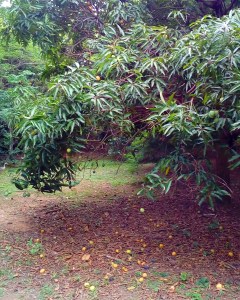
Let us go to the facts: in nature, a fruit-bearing tree let its fruits fall on the soil, and these will serve, among other things, as food for wild animals. Birds, squirrels and other rodents will be benefited from the fruits. The picture below shows a mango tree in the woods. Note how many fruits are splattered over the ground, during the spring and summer seasons.

a

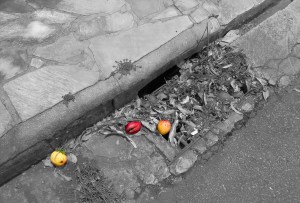
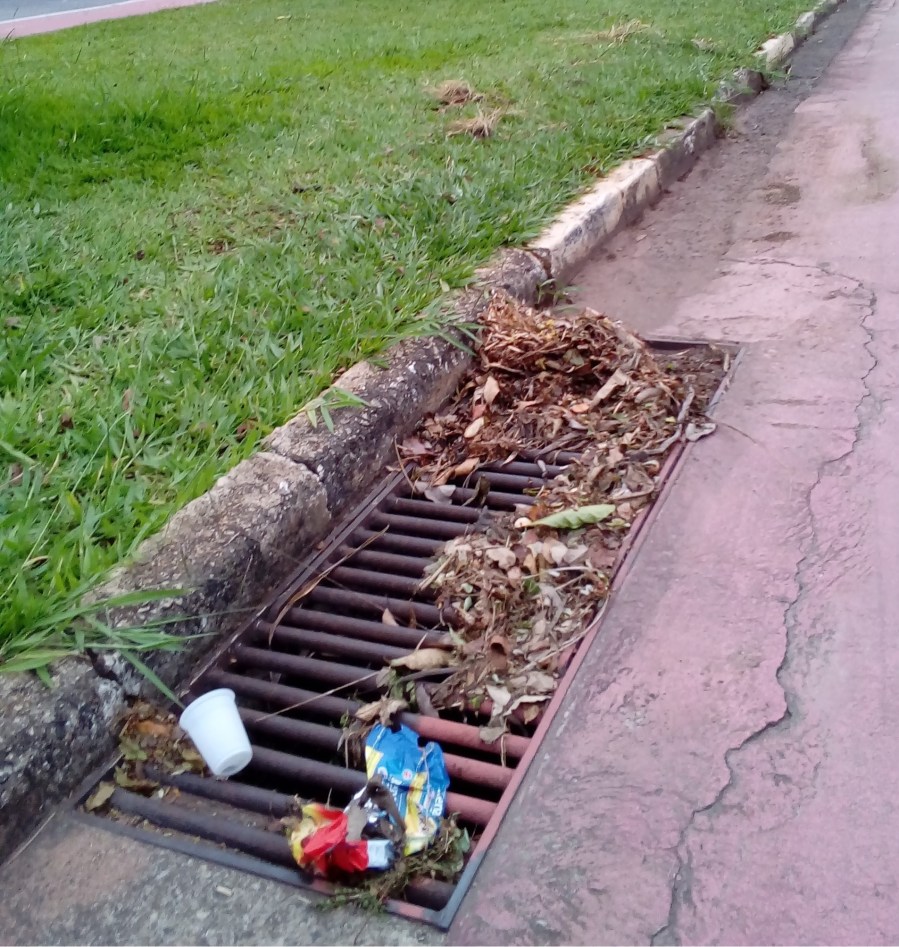
If we plant a tree of this species (mango tree) in a sidewalk, the fact will repeat itself. In the warm seasons, fruits will fall on the ground in a plentiful manner, if not harvested before. Fruits in sidewalks roll over when they fall, and move rapidly by the action of wind and rain. They may clog drains and prevent rain waters of being collected by the subterranean pipework, and flooding can happen therefore. See below the photo of a drain covered by leaves and fruits.

b

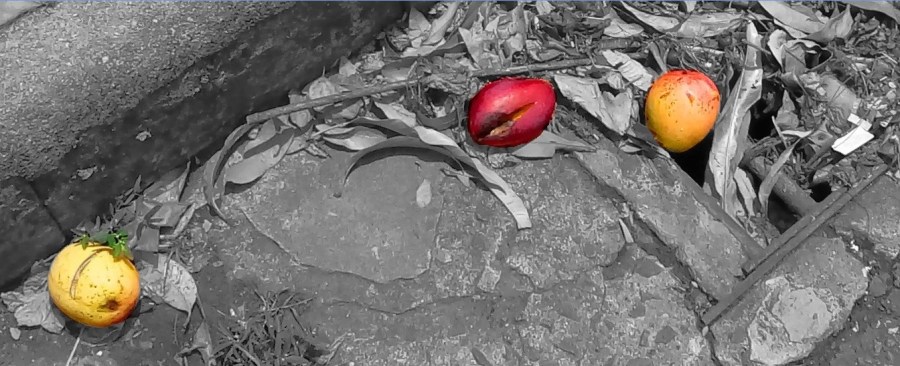
Note that the mangos, enhanced with colors in the photo, are splitting. If nobody takes them from the sidewalk, they might serve as food to rats, which are commonly found in cities and are capable of transmitting diseases to us, human beings. We have raised, therefore, two important urban problems: flooding and rodents proliferation. Now let us analyze suitable solutions.

c

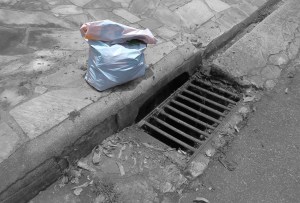
To sweep streets and put leaves and fruits in plastic bags is an immediate solution. See in the picture above how a clean drain looks like. See the bag with all the gathered material that was on and around the drain.

Remembering the reader’s comment that “good sense is necessary when planting a tree”, we can propose two more solutions. First is not to plant fruit-bearing trees in urban sidewalks, but in suitable places (parks or planned gardens).

Another initiative is to choose suitable species for urban environments before planting. For already existing fruit-bearing trees, a constant maintenance is absolutely necessary. It is not fair to plant a tree in an environment created by men, for men’s use (cities) and later hand this tree to the care of “Mother Nature”.

d

It is a pity to see delicious fruits like these ones in the photo, just thrown on the ground. An urban harvesting program, efficiently handled is another proposal to solve this problem. Volunteer groups or paid businesses could do a systematic harvesting job, to calendar. This would meet the commitment to keep the urban environment clean and at the same time protect trees from being unnecessarily cut down.

New year, new attitudes

The thirtieth:
Time to remember

Article published in January 2014 (adapted to 2017…)

OLYMPUS DIGITAL CAMERA

New year, new attitudes.
A year is gone, a new year is beginning.

What about planting a tree in 2017 ? Besides enlarging the green area of your city, you will breathe a cleaner air. Imagine that in 2023 you will be able to seat under its shadow… Isn’t it a wonderful motivation ?

Take trash recycling seriously. Encourage other people to do it, especially those who are unaware of its benefits. There is nothing worse to the cities or to Nature than litter out of its place !

Walk more and ride your bike, also for small shopping. There will be benefits for your health and for your pocket, besides saving some gas and polluting less the atmosphere.

A 2017 plenty of small accomplishments like these could turn it into one of the happiest years of our lives !! Happy 2017 !!

Tree “dirtied” the sidewalk with leaves, branches, seeds and fruits

5
Before coming here, we, the leaves, produced lots of oxygen for you to breathe !

To live means: to get nourished, to rest and to take care of our health and personal hygiene. These are the human bare necessities ! All the remaining activities (work, study, entertainment, etc.) come right after these basic needs were satisfied.

Personal hygiene is a very important issue in our lives. We know that if we don’t wash our hands before eating, we might get sick. If we don’t wash our body, we might get skin problems. If we don’t use deodorant, we risk smelling bad and bothering other people.

Another aspect of our personal hygiene are the clothes we wear. Dirty clothes may raise health problems, too. Then comes bed linen, followed by the room and house where we live. If they are not constantly cleaned, we risk getting sick. Example is the dust left on furniture, which can raise breathing problems.

When we get out of our home, our hygiene guidelines start to judge other places: public means of transportation, squares, streets and sidewalks. We could say “the bus was clean”, or “the square was dirty: empty packages were spread on the ground”. But, what about streets and sidewalks ? What make them dirty or clean ?

This is the point. Trees let leaves and branches, seeds and fruits fall on the ground. According to our hygiene habits applied at home, these items would be “filth” to be swept, put in bags and brought far away. If we keep thinking like this, it’s better not to have trees around. Hygiene is costly, why then have such additional work ?

Trees, however, have the right to exist and are necessary to our survival. Leaves on the ground are not filth. They are evidence that a tree generated oxygen for you to live. While gathering leaves, branches, seeds and fruits you will be valuing life itself. Don’t see it as an annoyance, but as a privilege given to good will and conscious people !