I didn’t like trees

In this last text, of a series of twelve, we are going to talk about how people feel. Life experience here on Earth is individual, and the perception of what is good or pleasant for some people may not be the same for others.

Some people feel good in front of a computer screen. They like shopping malls, electronics stores, and use to buy and use all kind of technological gizmos as soon as they are released in the market. At home, have no pets nor plants or flowers in vessels and consider this absolutely normal.

Others live surrounded by all kinds of pets, cultivate various plants even inside apartments and prefer to visit parks or green areas whenever possible. They also use the latest technology, but at second instance. To be in touch with nature comes in first place for them.

Both behaviors are socially accepted, and when someone says: “I don’t like trees”, we say that this is a matter of choice and that “there is nothing wrong with that”. This attitude may lead someone to put down a tree, just to be exempted to take care of it. Someone could have asked: why be forced to take care of something that you don’t like?

It is an absurdity “to force” a person to like something or someone. It remains to show that respect attitudes towards Nature and environment are necessary for the survival of the human species, in the long run. Trees provide us with oxygen to breathe, and the food that keep us alive comes from plants and animals that we cultivate or process.

This means it is necessary to create an awareness that human beings are part of Nature and depend on Nature to survive !
The tree was old

It is amazing how human beings can find excuses for everything. Case in point is a person who puts down a magnificent tree in an urban lot, stating that it was old.

In a forest, old trees fall and may cause damage to other trees and animals below them. In the cities, happens the same. It is not rare to see a fallen tree in an avenue, for example. This could happen in the middle of the night, even in the absence of winds or rain, and hurt no one. It is a matter of chance.

Urban planning, including the choice of appropriate trees species and a systematic control of existing trees are means to minimize the occurrence of a tree fall due to its age. This is feasible and can be done by municipal authorities or non-governmental organizations (NGO).

The purpose of this text, however, is to point out the habit of stating lame excuses to cut a tree. A person is paid to put down a tree, so the owner of the lot gets rid of a “inconvenience”, which he or she considers to be an obstacle to the sale of the property. Any excuse could have been used.

When a tree gets in fact “old”, it is acceptable putting it down if it becomes a threat, even in a private lot. No one is questioning the physical safety issue. But anyone who cares about Nature and is aware of the benefits brought by an OPU (Oxygen Producing Unit), would immediately have planted a young tree to replace the old one.

It was not a native tree

Among the many alleged reasons to put down a tree, this is perhaps the most bizarre one. It is a human determination; it just disregards the right to existence of the tree itself. Nobody asks to be born, neither choses a place of birth nor a social class. This is true also for trees.

There are many examples of non-native trees in Brazil. The avocado tree is native to Mexico. Mango tree comes from India. The apple tree has its origin in Central Asia. The Christmas Pine-Tree was brought to Brazil from conifer forests in the northern hemisphere. And so it goes…

In Nature, the dispersion of species may occur in several ways. Seeds are spread by the wind. Rivers and seas transport plants and animals from one place to the other. And due to their self-motion, animals carry with them diverse species to other localities.

We, human beings, besides having this self-motion, have also fascination, curiosity and economical drive acting on us. This is how, in a time of slight or non-existing ecological awareness, European settlers intensified the introduction of species coming from other regions of the planet to America.

To carry a species to a new locality sometimes generate ominous or undesired consequences. Case in point is the Nile Perch in Lake Victoria, in Africa, or the arrival of the first rabbits in Australia. But these issues not always occur, and new species adapt favorably to environments where they were brought to.

It would be insane to repatriate all species in this world to their original habitats. Nature is a mutant process and adaptation of species belongs to it. The presence of non-native species in a biome can be rationally controlled in order to avoid unbalance; however its sheer decimation contradicts Nature’s supreme principle, which is the preservation of life.

The tree occupied too much space in the sidewalk

Once more we talk about urban planning. Sidewalks are lanes where pedestrians walk. These lanes’ paving is expected not to be cracked, uneven, or slippery. They should not have any obstacle that might hinder the passage or put people’s safety at risk.

This is the ideal picture for a sidewalk. There are manuals and specific norms for sidewalks, which vary from city to city around the world. Not always these rules are followed, and it is a common thing in Brazil to find electricity poles placed in the middle of sidewalks, forcing pedestrians to step down to the street.

Hardly ever electricity poles are removed, due to their size and weight. But what if the obstacle is a tree? They may be high as electricity poles and may have grown right in the middle of a sidewalk, too. Once again, they will have no right to defense, if someone just wants to cut them down. And by removing a tree from an urban sidewalk, we will have one less OPU (Oxygen Producing Unit) in the city. Sad reality.

A solution meant to solve this problem is urban planning, focused on each city block, on every inch of a sidewalk. To make this proposal real, it is enough to say that the involvement of sidewalks users, especially dwellers and estate owners of the city block, is essential.

Before planting trees on sidewalks, the choice of the appropriate species is crucial. Some trees have roots that spread above the ground and may hinder the flow of pedestrians. Another important item is the distance from the corners (desirable 9ft 10in), since bulky branches, as they grow, may interfere in the traffic of vehicles while turning the corner.

Tree would decrease the value of a for-sale real estate

From all reasons stated in this series, in order to put down a tree, this one is the most perfidious. Face to face are two realities: “respect for nature” against “attachment to money”. Moral and ethics, the human soul itself, and the conflict between greed and altruism may be discussed here. But let us go to the facts first:

At the municipalities’ level:

There is a great amount of urban lots without trees in brazilian cities. These same cities miss Oxygen Producing Units (the trees), with their benefits: more fresh air and more thermal stability.

In the cities, there are also lots with few sparse trees. Sometimes these trees are cut down by the landowners under the excuse of “hindering the sale process”. And in most cases, the municipalities do not have any control, neither on planting trees, nor on putting them down.

At the citizen’s level:

Around a vacant lot, with sparse trees, neighbors are benefited from the shadow cast by one of them. Over the years they get used to the stable temperature it helped to keep. Suddenly they see the lot being sold and the tree put down without any convincing reason. Nothing will be constructed. The undeclared reason was the “hassle to keep a tree” and the “increase in value of the real estate”.

It is hard to convince some individuals that social well-being and environment conservation should be above immediate, money motivated interests. In order to change this sad situation, the making of laws, and their application, are necessary. To depend on the consciousness and good will of those who are solely focused on financial gains, would rarely lead to results.

It was a hassle to prune the tree, and I had no time to do it

This statement let us face two crucial factors in our lives:

  • Work to be done
  • Time administration

It is not these texts objective to pass some morality lesson or to teach the reader how to manage his time. Everybody should know that to accomplish a job, or to make some effort happen, like bringing garbage outside or feeding a pet, will depend on everyone’s good will.

Wise time administration is also a personal challenge. Each person should know what is important to do over a day or a week, and what the priorities are.

As said before, the objective of these texts is to propose realistic alternatives to avoid the unnecessary slaughter of trees in urban environments. Trees are Oxygen Producing Units (OPU), a highly valuable article among all of those that fill the urban space.

Pruning has been recommended several times in previous texts as an alternative to putting down trees. Now we analyze the alleged lack of time and drive to prune them. Obviously these are real factors: a person, exhausted by her job, trying to make ends meet, would have neither time nor energy to accomplish a gardening task.

A simple solution would be to hire and pay a gardener. A more evolved concept would be the organization of tree protection societies, promoting free of charge pruning by volunteer work. Another concept, utopic nowadays, but feasible tomorrow, would be the accomplishment of this task by conscious municipalities.

Tree was big and could fall over houses, cars, or people

Objects may fall from a variety of heights, and hurt people. The heavier the object, the stronger its force when it reaches the ground. Yes, we are talking about the Law of Gravity. Its validity applies to branches or tree trunks, and also for tiles, boards, or any sort of architectural fixture.

Another remarkable fact is that a gale or thunderstorm does not spare any object ahead, neither Nature’s nor human creation.

We want therefore state that, just for living in our planet, in a forest or in a city, we are subject to be hit by a falling object (caused by natural phenomena or not).

To keep a clean and safe environment in the cities is an honorable initiative. Nevertheless, when a hazard caused by a tree is identified, most of the times it can be resolved by pruning. Big and heavy branches may be cut without compromising the tree’s life.

The choice about what and where to plant are preventive solutions for this problem (to be adopted before it shows up). Systematic pruning is another preventive solution, to be put in practice continuously, i.e., during the growing phases of the tree.

Trees are Oxygen Producing Units (OPU) and putting them down is justified in extreme cases only. An example is when a tree is bent over a ravine and its fall is imminent. And, definitely, putting down a tree just for personal convenience is an anti-social and unacceptable attitude.

It is worth saying that the careful pruning of a tree means labor (people’s effort and costs). However, its outcome is highly compensating. Profits are: keeping the tree alive, better air quality and thermal stability.

Trees together were a hiding place for thieves

This is the fifth text about alleged reasons to put down trees in urban areas. The objective of the present texts (a total of twelve) is to throw some light in this issue, avoiding the choice for the easiest way to solve problems: take a tree’s life.

Trees are Oxygen Producing Units (OPU), they are living beings, and their presence close to human populations is a standard of living rate. It is always good to remember that their absence could lead to the desertification of a whole region.

In the previous text, we talked about trees covering up an architectural work. When using trees as a hideout, someone does it, because a tree is covering him up. The concept of “covering up a view to humans” is a common fact among trees (especially if many) and an unfortunate excuse to put them down. See some examples:

* A highway administrator does not allow trees along the roads, because they might cover up the view to cameras or satellites.
* In war operations, armies use defoliators on forests, arguing that under the top of the trees, enemy troops could be hiding.
* In tree-lined streets, rapidly growing branches cover up traffic signs, especially during the summer.

Public safety is important, and, absolutely, none wants to stay close to a hideout of thieves. Pruning bigger branches could be a solution, in many cases. It does not kill the tree and makes it “cover up” a little less what we want to see. Another solution, laborious, though, would be replanting the trees in another area.

The question goes deeper, however. It is difficult to offer solutions, in a simple text like this, to chronic social problems such as criminality, war or bad will. Once again, it will be the individual and collective consciousness to decide the trees’ destiny. Trees don’t have a way to defend from human conduct.

The vision of a building, an architectural work, was hidden by a tree

When a musician creates a song, he does it for other people to hear. This happens to other artists, too: a painter who creates a canvas, or an architect that designs an awesome façade for a two-story building.

Let us suppose that many trees were planted around this building, some time ago. Recall that trees are living beings and by the moment they were planted, they were seeds, perhaps seedlings. Then, time went by, and after several growing stages their foliage became thick enough to block any view to the architect’s masterpiece.

Two solutions are available at this point. First is branch pruning: when carefully done, it does not kill the trees, and would recover the sight to the building. Another solution is the removal of some trees, replanting them in another location. Their replacement by more suitable species could follow in the original place.

The choice involving what kind of tree should be planted, in any situation, is a very important issue. Let us keep in mind that a pine tree, a palm tree or an apple tree are all trees. Their shapes, height and foliage volume are different, however.

Any adopted solution to keep trees in a location, would require a considerable amount of work. Pruning, trees replanting, or choosing species, are all time consuming activities (very worthy and noble ones, however). Putting trees down, by simply leaving an empty space on the spot, is by its turn an unacceptable, selfish and anti-social attitude.

In times of global warming, we are urged more than ever to redefine priorities. A tree, seen as an oxygen producing unit and a thermal stability element, belongs to the system of nature and is God’s creation. It should therefore keep our attention in first place. An architectural work (human creation), could come right after, in second place. It is up to us, human beings, to act consciously while organizing the space around us.

Tree got car dirty due to birds resting on its branches

Bird

Much attention has been given to trees when we talk about “nature” or about the “environmental issue”. That’s because when a tree is planted where no tree existed before, a cycle starts. A tree is an oxygen producing unit, a humidity stabilizer and a shelter to small animals.

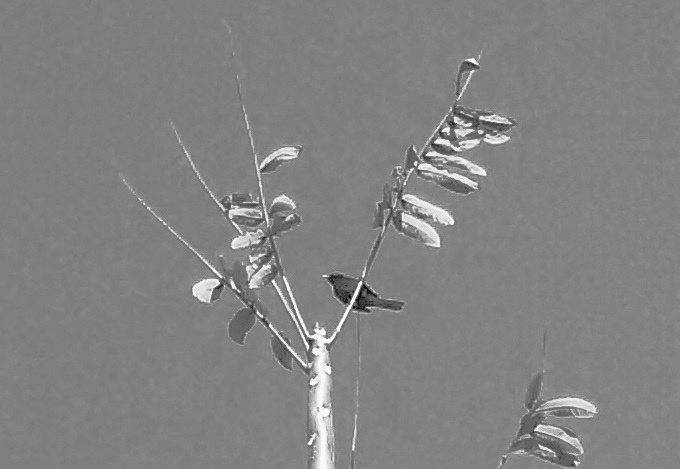
Some of them look for a tree due to its shadow (that is the case of human beings…), others search it for protection, as a refuge. Birds many times build nests, or simply rest on its branches.

The cycle continues when this tree reproduce. Another tree is born, and then, step by step, a forested area starts to grow with plants and animals around it (insects, worms, caterpillars, squirrels, etc.) We say that an ecosystem is taking shape. This process keeps going until its height, when an intense utilization of the local space and resources takes place. This stage has been historically called climax community.

These concepts are described in detail in ecology books. We decided to talk about them, because they illustrate how important a tree is in the cycle of life, here on planet Earth.

On the other hand, we understand that many people like their cars. They are practical, moving people and loads from place to place. They might be beautiful or not, and may have cost lots of sweat and work from those who own them.

When a bird resting on a tree let its manure fall on an automobile and this scratches its paint job, the bird is not doing it on purpose. Birds are part of the cycle of life in our planet, while a car is a human invention (no matter how useful or beautiful it may seem).

The awning, another human invention, is a solution to protect a car’s paint job. And compared to the price of an automobile, it is a fairly inexpensive gadget. Now, a decision needs to be taken: spend some money to buy and install a car awning ? Or cut the cycle of life represented by the tree and its birds ?  Everyone’s conscience  should decide.