Safety and bike riding (Part 4)

The thirtieth:
Time to remember

Article published in April 2015
Apr (2)

This fourth and last article addresses recommendations to drivers in general:


13. Consider that a biker is always in search of balance

Not everyone is able to seat on a bike and stay there without falling. In order to ride a bicycle, a person needs to balance on it. Many times, a biker cannot release her hand from the handlebar to show thankfulness for a gentle driver. In other cases, a biker could not show with an arm gesture her intention to turn to the left, for example. To release a hand from the handlebar could mean lose balance and fall to the ground. Take this always in consideration.


14. Keep distance from bikers

Asphalt holes or curls, a pool of oil, a thick layer of pebbles, a small obstacle, or even an ice layer (in places where temperature reaches 32° F or less) can make a biker fall. In streets and roads, the possibility of finding something that causes a biker to go to the ground is very high. Ironically, a biker needs space around her to fall in a safe way. Therefore, never pass too close by a biker. Keep always a reasonable distance (1 yard 2 feet or more).


15. Understand the meaning of a biker’s physical effort

A bicycle is moved by the biker’s legs: it has no motor. Therefore, when a biker is standing still and starts to move, he needs more time to reach some speed than a motorcycle, for example. And since a bike ride depends on the biker’s muscles, he could not be able to finish it due to energy failure. He will need to stop to get some nourishment and then keep going. He will always need lots of liquids and protection from excessive heat: a sunstroke, lack of water or food may cause him to faint.


16. Pay respect to spaces planned for bikers

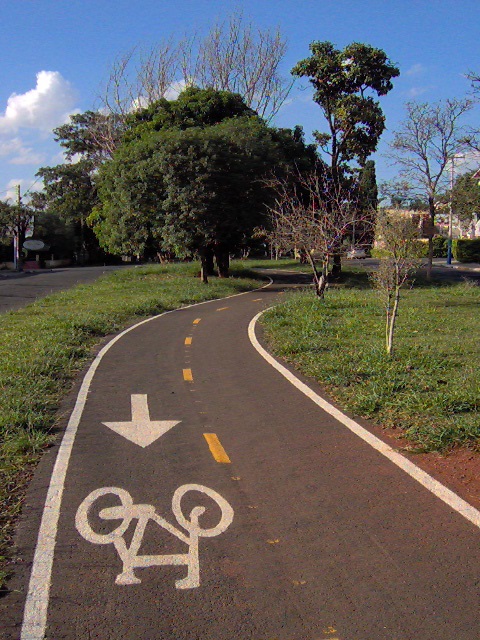
In the 21th century, more and more streets and roads around the world are planned to accommodate automobiles. Little space is dedicated to bikers. Who rides a bicycle, has to be satisfied with few bike paths offered by some cities. A driver should pay respect to these spaces, not driving or parking on the lanes planned for bikers. A peaceful coexistence in traffic will depend on obedience to the law, good will and mutual respect between drivers and bikers.
 

Safety and bike riding (Part 3)

The thirtieth:
Time to remember

Article published in March 2015

Mar (2)

In this third article, we talk about facts involving bikers and pedestrians.


9. Look at your side, use your neck

When you drive a car, your vision will be limited by some blind spots in the car’s body, and you will need to use rear mirrors. When you ride a bike, you will have total vision. Use this feature in your favor. Look at both sides, move your neck always and pay attention to obstacles, objects and pedestrians around you. To use the neck’s muscles is an excellent exercise, especially for those who spend their days sitting in front of a computer.


10. Ride in vacant sidewalks

Many times it is possible for the biker to ride in sidewalks. When vacant, they are a safer place to ride than the street. Some of them have crossed grass and cement patterns or holes, and these end up to be a worse place to ride than the asphalted street. But when there are no bike paths available and when sidewalks are in good shape, they become the best option for a safe ride.


11. Keep distance and warn pedestrians

The sidewalk is the pedestrian’s place: never disregard her. When coming close, warn her whenever necessary with a soft bell ring, in order to avoid a fright. When passing beside him, keep distance and ride at the pedestrian’s speed. There is nothing worse for him than a biker than comes up from nothing and passes too close, at full speed. Besides causing the pedestrian a fright, it can make anger grow against bikers in general.


12. Don’t use earphones when riding

In many countries around the world, it is against the law to use earphones when driving. Using them while bike riding means a big risk, too: you might not tell the upcoming of other bikers, pedestrians or automobiles. Riding your bike in parks or joint bike paths, where adults, children or leashed animals walk, will demand as much attention as driving in street traffic. Therefore, use your earphones later, after arriving at your destination.

Safety and bike riding (Part 2)

The thirtieth:
Time to remember

Article published in February 2015

2018_02


In this second article, we focus the biker who rides in the cities, alone and where bike paths are not available.


5. Do not compete with cars

Keep distance from cars whenever you have to divide any space with them. Let them pass through; don’t try to compete with them. Automobiles, trucks and buses are bulky and heavy. They need space to brake or to turn in a big curve. You, biker, occupy less space, you are light and have no steel body to protect you… therefore, keep distance.


6. Ride in calm streets

Opt to ride in streets where traffic is less intense, whenever possible. Sometimes you may be riding in a heavy traffic avenue, while its parallel street is quieter. It is worth to extend the distance to ride to make it in quieter routes. This is another way to preserve safety, keeping away from automobiles. It is a defensive attitude of bike riding.


7. Ride to the traffic flow

As children, we learned about conventions on walking in the cities. As pedestrians, we learned to wait for the traffic light to close in order to cross the street. Traffic is a system of conventions between people. To ride along the traffic flow is a convention that pedestrians understand, and motorcyclists and drivers obey. To ride against the traffic flow is to break a convention, and this gives rise to confusion on people’s mind when taking decisions. Let your intentions be undoubted when riding: always ride along the traffic flow, for your safety.


8. Use warning lights at night

To ride in a street in the dark and recognize a figure just when coming close, is like getting a fright. Who travels at night in a public route must use red safety lights, whether it is a truck, a car, a motorcycle or a bicycle. The back warning light is recognized at a distance and allows sufficient time for the driver to divert. Do no take a risk. When riding at night, always turn your back light on.

Safety and bike riding (Part 1)

The thirtieth:
Time to remember

Article published in January 2015

2018_01


In 2018, we will be presenting four articles about biker’s safety. From January to April, four recommendations will be published each month. The first twelve are for those who ride bicycles and the last four are for car drivers.


1. Get on and off your bike as many times as necessary

Keeping away from comfort is the number one rule for the cautious biker. In most cities there are no special lanes for bikers. She will have to use improvised ways, cross streets where sidewalks have no slope, etc. Never take a risk, trying easy but dangerous maneuvers: get off your bike and walk a bit, in complete safety, however.


2. Wear a helmet

A bike has neither body nor bumpers, and stays upright only if the biker is able to keep its balance. The helmet will protect your head in a collision, always wear it. It will also be a sign for pedestrians and motorists that you are a responsible biker, and they will tend to show more respect to you.


3. Wear light colored clothes when is dark (be seen)

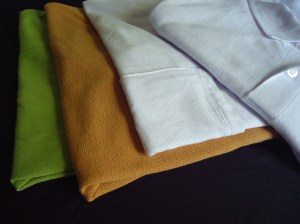
Early in the morning or in the evening, at night or when it is raining, traffic visibility gets poor. Who rides a bike needs to be seen by drivers and a simple, but very efficient way, is to use a light colored shirt. Or a coat, jacket, etc. White color, yellow, bold orange, or any other color that will make the biker recognizable at a distance.


4. Use the ringer when approaching (be heard)

Differently from a motorcycle or a car, whose purr tells you they are coming, a bicycle moves silently. If you notice that your arrival was not perceived and that it could create a risky situation, do a short “ring-ring”. It is a courtesy and will save from a fright pedestrians who walk in bike paths and also other bikers, especially when you come from behind or from the sides.

Riding around, Street Riding

The thirtieth:
Time to remember

Article published in December 2014

dec

In the legendary movie “Butch Cassidy and the Sundance Kid” we see Paul Newman having lots of fun riding a bicycle. That scene became famous, especially because of its background music, “Raindrops keep falling on my head”, an international hit by the ending of 1969 and 1970.

In the movie, the bicycle was a novelty. This is true also for children, who see it as an additional toy for them to play. They learn how to control it usually after some tumbles, and ride it with no definite course.

This initiation takes place most frequently in the backyard or in a park. What matters at this moment is prowling around, go back and forth, riding in curves. Only eventually they will be able to hold firmly the handlebar, ride in a straight line and follow some traffic discipline.

In another famous movie, “City of Angels” (1998), the protagonist Meg Ryan daydreams to her love partner while going home by bike. The happiness expressed in her face at that moment is unique. But the ending of the story shows that she was in a public way and in that situation… it would have been better to pay attention to the traffic.

We can envision here two different attitudes: riding around (moving in an unconcerned and pleasurable way) and street riding (managing a mean of transportation with respect to traffic laws). Always remember that to ride a bike safely in the cities, what matters most is to tell riding around from street riding. It is a matter of attitude.

Accept them, the bicycles

The thirtieth:
Time to remember

Article published in November 2014

IM000050.JPG

In 1817, actually two centuries ago, a kind of wooden horse on wheels was created in Europe. It would move by pushing feet against the ground, like a toy.

During the industrial revolution, it was found out how to transmit human force to a wheel by means of a chain and pedals. It was then, by the end of that century, that the bicycle as we know it today was created.

Until 1885, roughly 68 years of attempts, sweat and creativity went by. The golden age of bicycles in Europe were the 1890’s, when the novelty started to appear in the streets and to become part of people’s daily life. Along with its spread, cities grew and a new way of life emerged.

In the first half of the twentieth century, it became an effective mean of transportation in Europe. The automobile, another novelty, was at that time the privilege of a few ones. During the 1950’s it started to occupy spaces in the middle class of some european countries.

In the current days, there is a lot of talk about accepting bikes as an effective mean of transportation in brazilian cities. It will be necessary to create a culture of peaceful coexistence among bicycles, pedestrians, automobiles, trucks and buses…

Unlike to what happened in european countries, in Brazil cars and buses have been adopted before bicycles were utilized as mass transportation. Namely, a stage was skipped. Now is time to rethink an urban brazilian culture so the bicycle can be included with all respect that it deserves.

Trees don’t disturb

The thirtieth:
Time to remember

Article published in October 2014

oct

Years ago, a newspaper published a fact happened in a small brazilian town. Men and women united, decided to cut down all the trees of the street were they used to live. Reason: women meant it was too much work to sweep the fallen leaves. By their turn, men got irritated with the dirt made by the birds, because it harmed the paint and the windshield of the cars parked under the trees.

Bad business. If momentarily they got rid of two cleaning tasks, on the other hand they have lost several services that trees do to us:

1. The city temperature rises in the presence of vast cemented and asphalted areas. The existence of trees helps to fight this thermal pollution (excessive heat).

2. Trees help to keep balanced the air humidity. The dryness sensation is softened in gardens, parks or in streets surrounded by many trees.

3. We need oxygen to live, and it is produced by the trees. The presence of more trees around means breathing a cleaner air, being healthier and enjoying more well-being.

4. Many birds build their nests on trees (they dwell there…). They have therefore a place to live, and help the reproduction of trees and other plants.

The list keeps going. It is regrettable, but even today there is no agreement that planting and keeping trees is more favorable to the human species than getting rid of them. Many put commercial interests, real estate increase in value or sheer convenience above everything.

It is a matter of attitude, and this is the most difficult thing to change, if we want to improve the quality of life in the cities.

Clouds, rain and pools of water

The thirtieth:
Time to remember

Article published in September 2014

2017_Sep

From the window of your house, you can see a pool of water on the ground. After a while, it starts to vanish. Water begins slowly to evaporate and change place. Now it is in the sky. You look above and see a huge and plump cloud, carrying all the water that once was so close to you.

More time goes by, and rain falls in your city. The big cloud disappears and again you see close to your window, a pool of water on the ground ! It seems magic, but this transfer is another cycle of Nature, independent from human action. When we were children, we promptly learned what rain was, because we saw it, we heard it, and we felt its presence. Rain is in the lyrics of songs, in the movies and in poetry.

There are other cycles in Nature, less celebrated but equally important. Nitrogen, a colorless gas, is a component of the air we breathe. In the presence of a lightning bolt, it combines with oxygen, and comes to the ground. It then reacts with other substances and generates nitrates. Plants need nitrates… but they didn’t arrive in a sufficient quantity. Bacteria and fungi start acting: they are capable to generate nitrates and supply the needs of plants to live. Eventually we, human beings, will eat these plants !

In a very simplified fashion, we showed how a gas that we don’t see plays such an important role in our lives. This is a biogeochemical cycle (read “bio-geo-chemical”). It describes how a chemical element (nitrogen, in this case) circulates through living beings (bio), through the environment (geo) and takes part of chemical reactions with other substances. What a demonstration of the fantastic divine creation !

Human Creation

The thirtieth:
Time to remember

Article published in August 2014

aug3

There were so many materials discovered by humans along the centuries. Countless were the artifacts, objects and packagings created with these materials. Now, in the 21st century, we live day by day with this human creation. We are greatly benefited from the comfort that it all brings.

We can buy ready-to-drink yogurt packed in plastics, we can comfortably use nail clippers made out of metal, scribble some notes in a paper pad and so on. This is all human invention, combining materials with specific uses.

But time goes by. Nail clippers start to rust and we do not want them anymore. The notes we wrote on the paper pad are already outdated. The yogurt has been drank… and its packaging becomes useless to us. We want to get rid of all of that. Then comes the magic word: trash !

How nice that someone has invented the garbage truck, that someone collects from our street the useless stuff and brings it all far away. But remember that the metal of the nail clippers, the plastics of the yogurt package and the paper from your pad are recyclable: they can be used again.

When you discard, think big: you are not getting rid of your garbage, but ensuring raw material for the products and packages that you will be consuming tomorrow.

Sustain

The thirtieth:
Time to remember

Article published in July 2014

July (1)

We know the word sustain. We know that children need care, and that parents support them. There will be a moment in their life when changing diapers will cease, handing them pocket-money will stop or paying college will come to an end. Children become independent and start self-sustaining, i.e., supporting themselves.

Observing Nature, we notice that an orange tree let its leaves and oranges fall on the ground. If oranges are not harvested, they will break off after a while. Leaves, peel and pulp will merge with earth and, with the help of microorganisms, will become soil’s nutrients. The seed will grow, and a new orange tree will be there, producing new oranges. This is a cycle.

An orange and its parts (peel, pulp, seed) are recyclable, and this process is conducted by Nature. No human action is needed; it will happen in an independent way. Therefore we call it self-sustainable.

In our daily lives, glass is an example of cycle. Used for thousands of years, it is a material developed by man. Today we use glass in packages, which after use, can be recycled. But human action in this cycle will always be necessary. Used glass cannot remain in the environment until it breaks off. It needs to be taken away to a recycling unit, to be molten and reused. Glass is recyclable, but this process depends on human action.

Tires are another case. Part of their raw material comes from the rubber tree. After its use, however, it is not possible to reuse this original material like we do with glass, for example. Old tires are used in new shoe products or are shredded and mixed as an ingredient of road asphalt. And this process also depends on us to be carried.

From these examples, the orange tree one is the most functional and complete. We, human beings, are challenged today to create materials and processes inspired by the self-sustaining examples of Nature. This challenge adds sense to the word s u s t a i n a b i l i t y.