
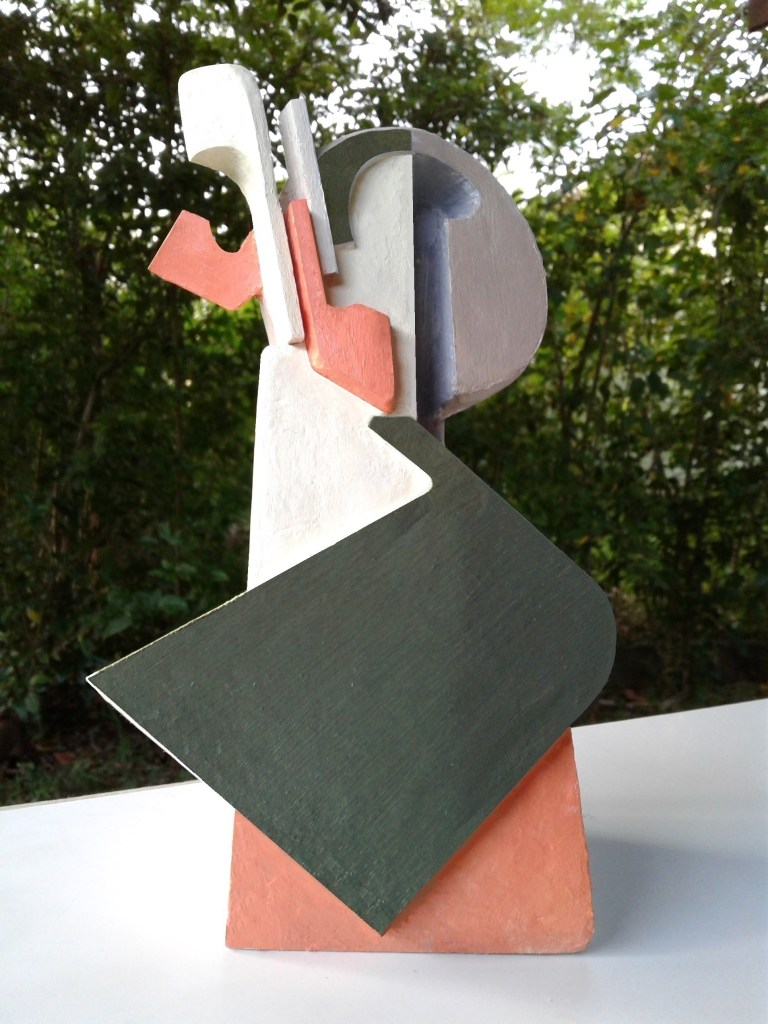

“Faith” presents Brazilwood
Brazilwood is the proposed tree for the tenth station of the park. Its scientific name is Paubrasilia echinata and it belongs to the Fabaceae family.
Brazilwood would have this name due to the red, ember-like color of its wood. However, there are other theories about the origin of the word Brazil. One of them points to verzino, a Tuscan word for a wood from which paint was extracted. There are also other names for the “Brazil wood”, in its place of origin:
Pau-de-tinta (ink wood)
Pau-pernambuco (pernambuco wood, while Pernambuco is a brazilian state)
Pau-rosado (rosy wood)
In the Tupi language, the tree has the following names:
Arabutan
Ibirapitanga
Ibirapiranga
Ibirapitá
Orabutan
In Tupi, ïbi’rá means wood while pi’tãga denotes its red color.
The tree reaches 15 meters in height and is famous for the quality of its wood and the resin used in the manufacture of fabrics. Its trunk is grayish in color and covered in large “spines”, technically called aculei. Its leaves are small and oblong in shape.
Much is said about Brazilwood, when studying the arrival of the first Europeans to the coast of South America. The name of the immense territory conquered by the Portuguese became Brazil, due to the abundance of this species in the Atlantic Forest. At that time began the trade of Brazilwood, a phenomenon so intense that it generated a dangerous process of decimation of the species, leaving sequels to this day. The Brazilwood is currently considered a vulnerable species, in danger of extinction.
In this year of 2022, we celebrate Brazil’s Independence Bicentennial along with the 100th anniversary of the 1922 Modern Art Week. Being the starting point of modernist aesthetics in the country, it bore fruits such as the “Pau-Brasil Manifesto” and the book “Pau-Brasil” (“Brazilwood”) by Oswald de Andrade . These idealized, in a natural and primitivist tone, autonomous values for the young nation, which had just completed one hundred years. With “Poesia Pau-Brasil” (“Brazilwood Poetry”) Andrade aimed for a pioneering “poetry for export” (a first production that was actually original to the country, and not a production derived from foreign models).
And you, do you know Brazilwood? The tree that gave a nation its name carries with it history, tradition and also the awareness of recovery and preservation of brazilian native forests. And here’s the question: have you ever seen a Brazilwood forest?

 Natura Futura