
The thirtieth:
Time to remember
Article published in July 2014
We know the word sustain. We know that children need care, and that parents support them. There will be a moment in their life when changing diapers will cease, handing them pocket-money will stop or paying college will come to an end. Children become independent and start self-sustaining, i.e., supporting themselves.
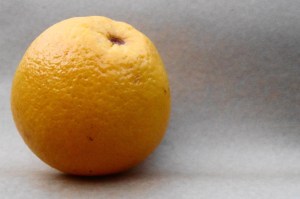
Observing Nature, we notice that an orange tree let its leaves and oranges fall on the ground. If oranges are not harvested, they will break off after a while. Leaves, peel and pulp will merge with earth and, with the help of microorganisms, will become soil’s nutrients. The seed will grow, and a new orange tree will be there, producing new oranges. This is a cycle.
An orange and its parts (peel, pulp, seed) are recyclable, and this process is conducted by Nature. No human action is needed; it will happen in an independent way. Therefore we call it self-sustainable.
In our daily lives, glass is an example of cycle. Used for thousands of years, it is a material developed by man. Today we use glass in packages, which after use, can be recycled. But human action in this cycle will always be necessary. Used glass cannot remain in the environment until it breaks off. It needs to be taken away to a recycling unit, to be molten and reused. Glass is recyclable, but this process depends on human action.
Tires are another case. Part of their raw material comes from the rubber tree. After its use, however, it is not possible to reuse this original material like we do with glass, for example. Old tires are used in new shoe products or are shredded and mixed as an ingredient of road asphalt. And this process also depends on us to be carried.
From these examples, the orange tree one is the most functional and complete. We, human beings, are challenged today to create materials and processes inspired by the self-sustaining examples of Nature. This challenge adds sense to the word s u s t a i n a b i l i t y.
 Natura Futura